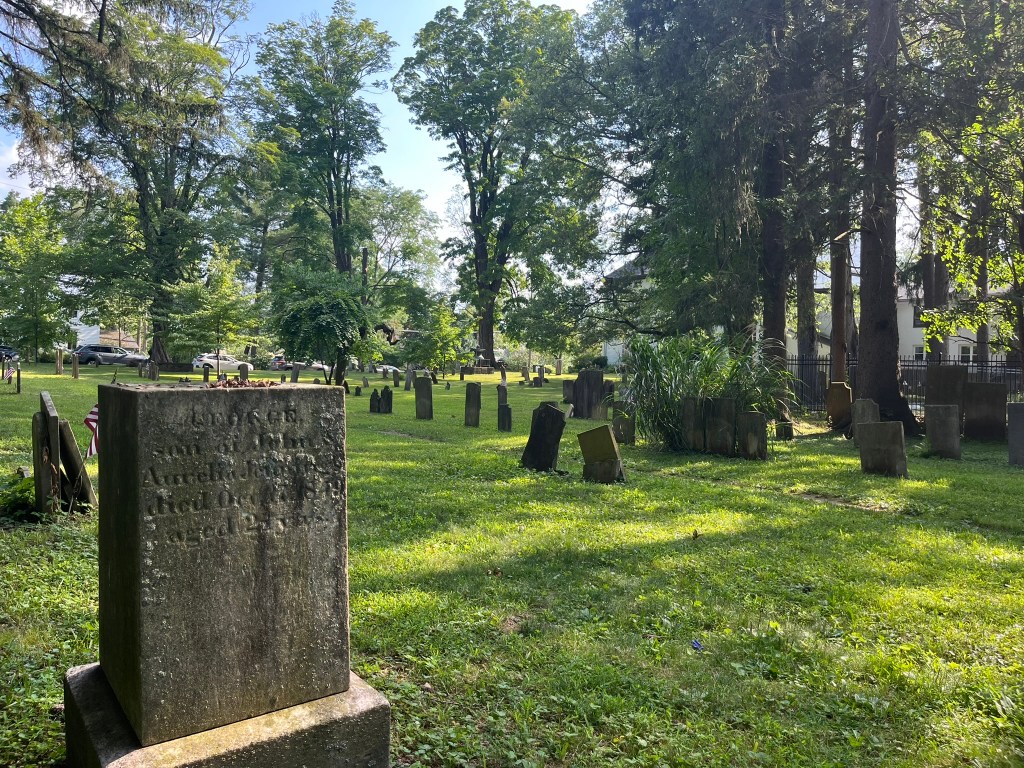
The men never met. I was … I wasn’t a link between them. I was the only person that knew both. I like to think I knew them well. I don’t think they knew me, even though each of them cared for me, in their own ways, ways I can feel but still cannot explain.
Both men spoke slowly, drawls purely Texan, one with a patience & probity of the ancients, the other with a gentle & lifelong braiding of Spanish & English.
Both were men of the outdoors. Both smokers. The corners of their eyes wrinkled by time – decades – in the sun, reading.
The professor earned a reputation as a grad student for basking in the sun, Loeb edition nearby, overlooking the only hill in the town.
The postman four hours away, uniformed, at ease, moved from the curb to the door and back again to the open door of his truck.
Both men lived & worked in a limited orbit deep with meaning, deep with people who knew them for years, for decades.
They died within days of each other. Each loss jarred me. What was he to me? What was I to him?
G-d forgive me, I truly mourned only one.
I was told that he had learned, so late in life but not too late, to think deeply. He connected with family. He lived a new kind of joy, one that you could see only if you had known him as we had. He hoped he had little to regret. From the pulpit, his son implored us, Forgive yourselves – as he had.
To live at all is to be bruised. Life is a full contact sport. We reach out, perhaps to be refused, perhaps to discover just the sort of person we're meant to love or to avoid. Pity those poor souls that pass through the sieve of life like flour, soft & white, their roles never challenged or usurped by bad luck or bad choices. Pity these frail things. Don't try to warn or explain. Don't waste your voice. Instead, delight in your bursts of bodily rainbow revealing what you survived, what you know.
The opening line is from page 332 of Sarah Perry's The Essex Serpent.
The man wakes up earlier than he wanted to, groaning as he turns onto his side, his knees popping as he stands up mostly straight from his side of the bed. The other side is empty, as it has been for … for how many years? He could tell you. She died … he wishes he could say that she died peacefully. At least she didn’t die alone. The point is that he keeps to his side of the bed, as he always has. The house creaks. A squirrel patters across the roof. The man goes to pee again.
*
To call the house lonely seems maudlin to him. Instead, he calls it quiet, quiet as he once hoped it would be. (Praised be the G-d who delays what we hope for.) He can tidy it whenever he wants now, can arrange it however he wants now. He eats right out of the pots & pans now, something she never would have allowed. This freedom is … it is an empty freedom. No, he thinks, it is a pitiable freedom. To think he once wanted exactly this, to think he once rolled his eyes at her wishes for their home.
*
His pajamas are thin, near-transparent at the elbows and knees. His slippers are thin, like walking on moth’s wings. He knows that others have it worse, and he is self-conscious of how frail he is, which he swears is less frail than he looks. He has the kind of old man tics & tells he once laughed at. Cardigans & vests, words just out of his grasp, ideas that lose their shape. He shaves & dresses & brushes his teeth without looking in the mirror, so disorienting is the fact of this sallow, weathered face looking back at him. How much older will he look in a year? in five? in ten? He can hardly imagine. He once could. Does he smell old? Would he even be able to tell?
A man of his age, wifeless, spends his days with self-lacerating questions like these. There are tasks & chores but there are no … [say it] there are no stakes in this life anymore. He tells himself that there is still meaning in it.
*
Today walking to the kitchen, he sees a shaft of light piercing brighter than usual across the back deck through the window. A celestial finger pointing into the quiet room. To call it a living room seems like a sick joke, he thinks. He thinks about words a lot. He turns his head, yawning his vision to the shelf by the piano, illumined by this shaft of sunrise. The morning’s celestial finger spotlights a photo of the two of them. A candid photo. Before cell phones. Before marriage. Before children. They are young & beautiful. Her deep brown eyes framed by her thick brown hair. Her legs crossed with effortless elegance. He is talking; she is laughing. He remembers.
The dog’s claws tick a familiar rhythm across the floor. The man swells with joy, knowing the dog will brush his leg affectionately soon. There he is now. Good boy.
He pats the dog roughly, lovingly as he tightens his robe & slips on the dog’s leash. He takes a plastic bag from beneath the kitchen sink, folded just as she always folded them, just where she always kept them. The leash on his wrist, he pulls on a grey wool hat and, just so his kids don’t worry, pockets his cell phone.
He unlocks the door. It’s gonna be a beautiful day after all.
Artists & musicians are subsidized. They can be summoned via text or video call like you’d call the fire department. Your first child is born? Call for someone to sing a song welcoming her to the world. Disappointed over some work thing? Summon a poet who will create & perform just the right uplifting words.
Education is recurring. You & your neighbors are always enrolled in a rotating set of growth challenges, each of which is related to the public good. Handiwork, for example, renews each year — gardening, crocheting, whittling. You’re required by law to gain functionality in a new language every ten years.
Medicine is free. When you’re sick, you know someone will care for you. Every prescription comes with two free prepared meals, one for you, and one for a neighbor, who knows what ails you & who checks on you — not because it’s required by law, but because you care for one another.
Non-commercial green spacesevery five square miles. Dog parks, yoga, tai chi, party pavilions, and vegetable gardens are nearly walkable for everyone everywhere.
Ceremonial public napping. “Mind the gap” takes on a new meaning to focus on gaps in time. You & your neighbors take shared deliberate pauses in the day, not just pauses from work but pauses from our home spaces. All neighbors pull collapsible cots into the streets for a shared rest. A low gong opens & closes these cathedrals in time.
Jewelry & accessories are biodegradable. We adorn ourselves with acorn necklaces, vine tendril bracelets, sachets of flowers & fruit rinds. Once a thing begins to rot, you return it to the earth with a prayer of gratitude. After an adornment-free week, you decide whether or not to seek out a new way to celebrate & adorn yourself.
Alter egos. Everybody has somebody. Every four years, you’re assigned at random a neighbor (reader, as you might have noticed, the word has broader parameters here) to harmonize with via video call — and in person walks, if you choose. These interactions are known as harmonies (not necessarily musical), and each has two parts: Manage & mitigate, then surprise & celebrate. That is, first you unpack what might be burdening you or occupying your attention; then you invite the neighbor to applaud & delight in what has blessed you lately.
Full moon reconciliation. Every full moon, every neighbor performs a reconciliation beneath the moon. The reconciliation may be spoken to a fellow neighbor, perhaps a neighbor wronged deliberately; the reconciliation may be spoken within the heart, perhaps a shortcoming that demands frank acknowledgement before growing into peace. Note, reader, that the word “reconciliation” also means “acceptance”, as in, I joyfully reconcile myself to this body weight, to this level of mastery at archery, etc. The reconciliations conclude with a silent food exchange between neighbors, only a food item that can fit in one’s hand.
Living eulogies. On a neighbor’s five hundredth moon, three people create & share living eulogies. A neighbor, an alter ego (not necessarily the current one), and a family member. Each eulogy is written by hand and is preserved as a scroll nestled in a segment of bamboo. After the eulogies are complete, each eulogist paints their signature on the bamboo & melts wax to seal it at each end. These eulogy bamboo are then stored prominently on the inside of each person’s front door, so that they enter & exit each day with those words gracing their paths. The bamboo are unsealed & reread upon the death of each neighbor.
Some women do not wait for a beloved. They create their own love, their own futures. Their vision -- a seed grown, blossomed, harvested. They hope, they plan, they seek, they woo. Their chosen man is twice blessed -- with love, & more importantly, with a guide in how to love bravely.
Men, or at least the unwisest, avoid such women, lest they lose freedom or a sense of some sexy aura they never had anyway. To love, they think, is to obey.
Let there be few such men, & let them read this warning again.
Inspired by Anne Sexton's "Housewife." Image Victor Brauner's Sign.
I am Felix & Noelia’s third child, their third son.
Vietnam separated & complicated the arrival of my brothers. I was born into a suburban safe house, a happy family.
Briefly, I was the baby. Then came a fourth son; finally, a girl. Hand-me-downs & shared bedrooms didn’t blunt what was there all along: Knowing I was loved, I was not alone.
Working with my students today on 100-word memoirs, I leaned (as I often do) on the cherita form. This one was easy : )