middleagedmiddlechild.

I write.

I read.

  • origin story.

    August 22nd, 2025
    June 8, 2021, ABQ
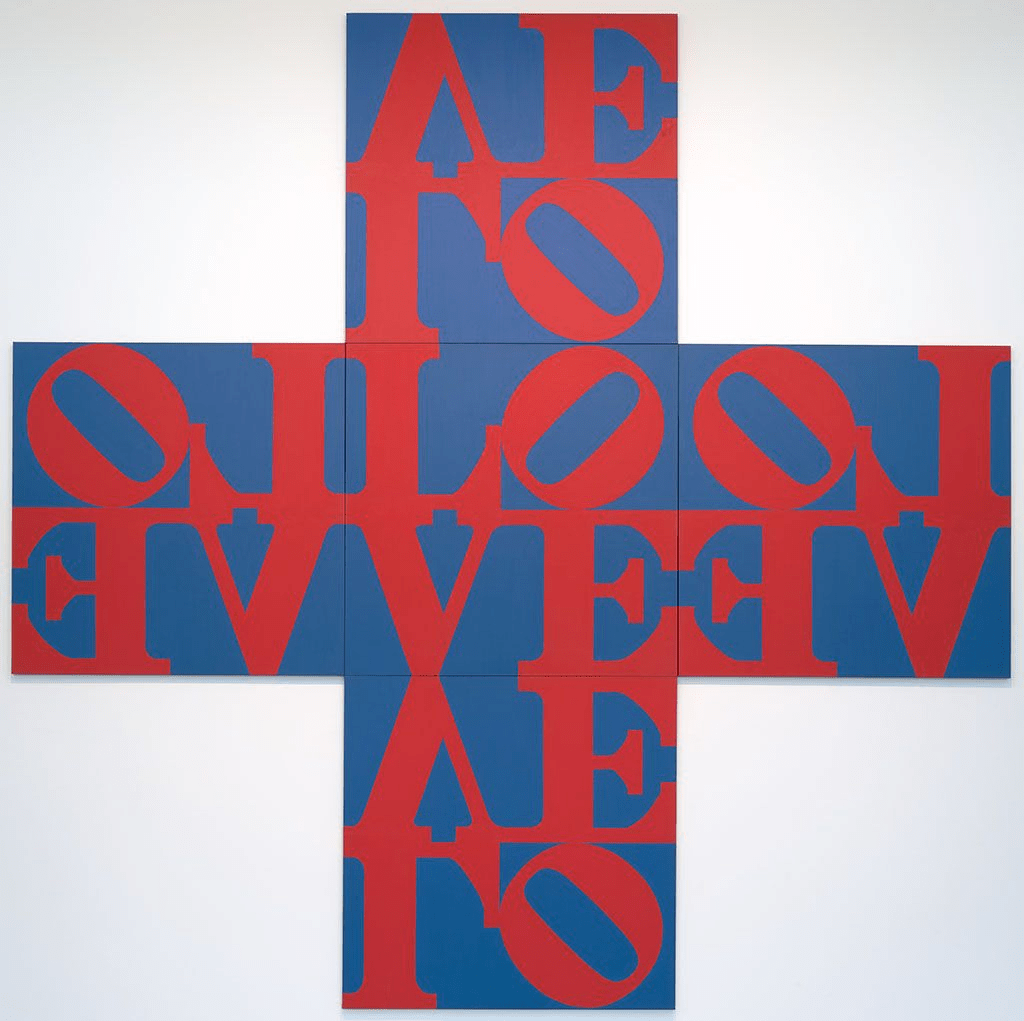
    How lucky I am to be loved
    by the right person
    for the right reasons

    How lucky that she saw
    through whatever bluster
    I had curated, that she saw
    beyond my obvious
    need to be loved
    and chose to love
    me anyway

    How lucky that she chose
    to imagine a selfless
    me, a chance to be
    exactly who she was
    but with me, for me

    Even if I'm wrong
    about what she saw,
    I'm right
    about what it meant,
    I'm right
    where she imagined us

    It was a bright day
    She had thick hair
    almond eyes

    She left the club
    and then came back
    to talk to me

    I owe it all
    to that kindness,
    to her

    Don't call it luck

    In honor the day that changed my life — Sunday, August 22, 1993. The day I met Michelle here.

  • growing up.

    August 22nd, 2025
    Roni Horn, “Becoming a Landscape” (detail)

    What we call growing up is a series of blessings. Hands that bathe & clothe us, voices that soothe & serenade us.

    Friends pass in & out, not knowing what they might meant to us or to one another. Some of them take root. Family members in far flung places confuse us — names almost like yours, faces like some funhouse mirror version of your parents’, houses & habits curious enough to make you wonder how this is their normal. And the quiet discovery that blood deep though you may be with one another, you are as foreign & perverse to them as they are to you. If they think about you at all, which they rarely do.

    There’s a shift that nobody prepares you for: when you stop talking about growing up and move to talking about growing old. You recognize with some surprise (maybe even alarm) that you’re no longer the youngest person in the room. You pass mannequins & wrinkle your nose at what passes for handsome, what passes for stylish. Things are passing you by, and the passing stings.

    What do we call this time? Middle age … if we have children, perhaps; if we have older parents, definitely. Maturity … almost never. That word, a sucker punch targeting the young, a word to criticize their carefree here & now for being carefree, for focusing on here only, now only, for reminding us of our worry-riddled everyday.

    What is this self that we have become, and where are its blessings?

    [to be continued]

    [Inspired by Jakuta Alikavazovic’s Like A Sky Inside]

  • i read: august 2025.

    August 5th, 2025

    Last month, I wondered if I might be reading too quickly. Even for teacher-on-vacation mode, the pace was surprising. A lot of books and, more importantly, a lot of books back to back by one author. I really felt like I got, say, Colum McCann or Willa Cather. I might be back into that mode one day, but for now, I’m trying to slow down my reading. Or I will, with my next book.

    The first one I read this month was Fiona Davis’s The Stolen Queen. Wikipedia tells me that Davis writes historical fiction set in NYC. I don’t remember how this one wound up in my library queue, but that’s one delight of buying fewer books these days. When my default was purchasing books, I had a closer sense of the origins or my interest in a book. With a library queue, I often don’t remember what led me to a story. I doubt that I would teach The Stolen Queen, but that probably says more about me than about the book. We meet Met curator / Egyptologist Charlotte Cross in 1978 as the museum is gearing up for two things: The Met Gala and the tour of King Tut’s remains. Davis also takes Charlotte back to Cairo in 1936, when she discovers (& loses) a gorgeous piece from a tomb she co-excavates. You’ve got some smoothly included history and art, both Egyptian and fashion-focused (thanks to the Met Gala passages). Annie Jenkins, a teenager just out of high school, loves the Met, visits it often, and winds up working there as an assistant to Diana Vreeland. When an artifact gets stolen during the Gala, Annie is blamed, and Charlotte (suspecting that it was stolen in order to be returned to Egypt) sets off on a return trip to the Valley of the Kings in search of the stolen queen. As I’m typing this up, I recognize that it’s a lot of plot, in two timelines, with two family histories that I haven’t even talked about, with important debates about the morality of “owning” excavated / looted / stolen antiquities. The debate doesn’t get resolved because it isn’t in real life; the chase for the queen and the partnership struck up between Charlotte & Annie is suspenseful and fun and thoughtful.

    I’ve encountered Jenny Odell’s How to Do Nothing: Resisting the Attention Economy in loads of lists & podcast guest recommendations and only recently read it. I’ll offer the cliched critique that it’s one of those nonfiction books that seems “padded” beyond the limits of its stated practical goal / title. But Odell recognizes that this how-to has deep cultural roots (Diogenes & Thomas Merton, Bartleby & hippy communes, performance art & labor unions, etc.), so what some readers might call padding is actually context, is actually variety, is actually needed. I was inspired by lessons from wage laborers that Odell recounts, especially given her reminder to advantaged readers like me, who have time to think about our attention. I was made quite nervous by her research into the millennial “grind or die” ethos that sees excellence (in grades, in internships, in off-the-clock work availability) as the for-now assurance of possible financial security. Gonna be thinking about this one for a while.

    I’m rereading a book, Chance Meeting: American Encounters, that I loved when I first read it because it innovates upon the promise of its idea: Construct a daisy-chain of chance meetings & inspirations & interactions of American creative people. This takes a little explaining, but just a little: Author Rachel Cohen writes a chapter devoted to Person A meeting Person B, then one devoted to Person B meeting Persons C & D, then one devoted to Person D meeting Person E, etc. I The chapters often capture one person in pre-fame, or even pre-talent mode; they ground each person not only in the age of the times but also in the specifics of their domestic and working lives. For example, Willa Cather before her fame seated at a birthday dinner for Mark Twain just before he dies; for more examples, scroll down on this page of Rachel Cohen’s site. A really idiosyncratic whos-who of American culture & letters. And even more idiosyncratic, for as heavily researched & factual as Cohen’s “encounters are, she prepares the reader in the intro for a little needed latitude: She opens & closes each chapter with a paragraph that, based on her research, is all her lens, is utterly imaginative. LOVE this book. (Shameless sort of unnecessary reader flex: When I got the book years ago, the [better] title was A Chance Meeting : Intertwined Lives of American Writers and Artists, 1854-1967.)

    I read two novels by Penelope Fitzgerald, a writer who published her first book at 58. The two novels I read were published late in her career. Shortlisted for the Booker Prize in 1988, The Beginning of Spring opens with a mother abandoning her husband, taking her kids away from their home in Moscow. The entire family is British, but have been living in Russia long enough that all feel thoroughly Russian — it is right before the Russian Revolution, which lingers for the reader but impacts the characters like a possible haunting. How the father keeps his family warm and happy, how the husband hold out hope that his wife will return, how the provider for this family contends with perilous work and cultural conditions animates this subtle & powerful novel. GREAT ending. Fitzgerald’s last novel, The Blue Flower, is a piece of historical fiction that won the National Book Critics Circle Award in 1997. It’s about a German Romantic thinker I had never heard of. In this novel also, human relationships are realistically complex, tragically funny, and believably unpredictable. You really get a feel for how things were then & there — with respect to wooing, to university life, to royalty, to money, to weather, to town life — and you get a feel for how little changes — with respect to ego, to life’s mysteries, to fortune, to family. Not sure I’m explaining this very well, but neither could The Guardian‘s critics, so [insert shrug emoji], all I can do is recommend Fiztgerald’s work heartily.

    I wrapped up the month with a novel that I enjoyed less (much less) than any other I read this month. When you read a lot, you can brush off or appreciate certain stylistic tics in a work because you know that you’ll be on to your next read soon. And sometimes, there are stylistic tics that you can’t unsee, stylistic tics that seem downright inconsiderate (or at the very least attention-grabbing-while-claiming-to-be-attention-agnostic). This novel I read had two that drive me to distraction. First, dialogue is not separated from narration in any way. No quotation marks, no dash, nothing. Joyce separated dialogue from his prose, Borges did too, Barthelme did too, etc. If you think this choice is “modern” or “realistic”, well, you must be waaaay more modern & cutting-edge than those authors. [ahem] The other thing that this novel does is dismiss with traditional comma usage. The author / narrator / protagonist writes what English teachers would call comma splices throughout. Sometimes that kind of choice can represent well a breathless or frenetic interiority about the character or narrator; this character had those moments, granted, but those moments were not rendered as extraordinary emotionally because the entire dang novel had that comma tic, so heightened moments were not heightened. I mean, look, [inset name of author]: You’ve got paragraph breaks that follow convention, you’ve got chapter breaks that follow a standard sort of pace, you’ve got a straightforward sort of affection / attention triangle, you’ve got a narrator that’s upper class & educated & utterly free, so why are you pretending that this choice has any impact other than to signal boost your “‘”boldness”” (extra air quotes deliberate) in a novel that is anything but bold? It’s rare that I stick with a novel I don’t love, and in those cases, I don’t write about it here. This one is an exception.

  • eulogy.

    July 8th, 2025
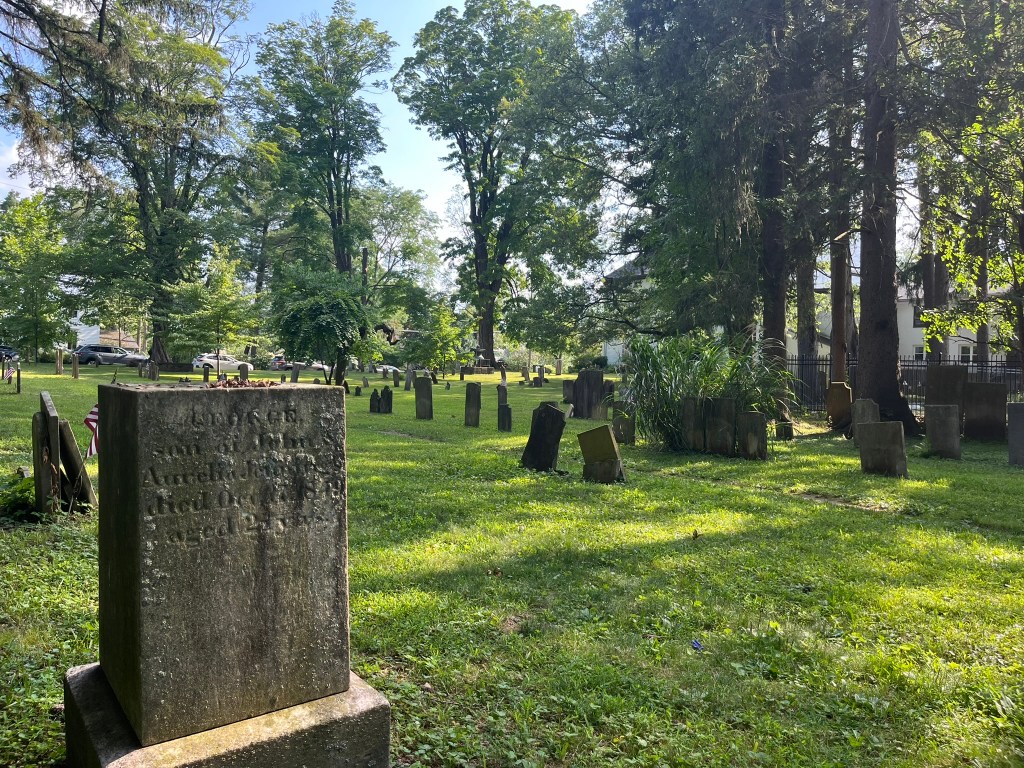
    Rhinebeck Reformed Church graveyard, July 10, 2024

    The men never met. I was … I wasn’t a link between them. I was the only person that knew both. I like to think I knew them well. I don’t think they knew me, even though each of them cared for me, in their own ways, ways I can feel but still cannot explain.

    Both men spoke slowly, drawls purely Texan, one with a patience & probity of the ancients, the other with a gentle & lifelong braiding of Spanish & English.

    Both were men of the outdoors. Both smokers. The corners of their eyes wrinkled by time – decades – in the sun, reading.

    The professor earned a reputation as a grad student for basking in the sun, Loeb edition nearby, overlooking the only hill in the town.

    The postman four hours away, uniformed, at ease, moved from the curb to the door and back again to the open door of his truck.

    Both men lived & worked in a limited orbit deep with meaning, deep with people who knew them for years, for decades.

    They died within days of each other. Each loss jarred me. What was he to me? What was I to him?

    G-d forgive me, I truly mourned only one.

    I was told that he had learned, so late in life but not too late, to think deeply. He connected with family. He lived a new kind of joy, one that you could see only if you had known him as we had. He hoped he had little to regret. From the pulpit, his son implored us, Forgive yourselves – as he had.

  • i read: july 2025.

    July 7th, 2025

    The summer has provided me a lot of time to read, and I worry that I’m reading too quickly as a result. Or maybe I should be glad that, between semesters & with increasingly independent self-sufficient teenage kids, I can devote large swaths of time during the week to what I love. I kicked off the month with two short novels & a novella.

    In Desperate Characters Paula Fox depicts the kinds of characters that I would probably really enjoy in a Woody Allen movie. Educated, status-savvy without being materialistic, child free, articulate, emotionally vulnerable … as I heard somewhere, these are the kinds of people who grow up using “summer” as a verb. It begins, as any reader would note, with a biting-the-hand-that-feeds episode, Sophie Bentwood & a stray cat outside the apartment she shares with her attorney husband Otto. Social engagements (a dinner party, late night drinks, a leisurely weekend brunch) delay a trip to the doctor, and political / economic realities (crime, work struggles, a city that never sleeps at its shabbiest & dirtiest) make the daily troubles of this upper-class couple feel downright existential.

    In The Country Girls, Edna O’Brien brings two teenage girls to age & to the city (Dublin). Caithleen “Cait/Kate” Brady and Bridget “Baba” Brennan are school friends and, due to the size of their village, their paths & families cross often. Cait loses her mother early in the novel and, thanks to a scholarship to a convent school, she doesn’t have to live with her often-boozing widowed father; Baba’s family is much more well off, much more secure, but is not without tensions & dysfunction. Both leave their villages for the same convent school & then leave that school for the city. This is the first novel of a trilogy, and it feels like it. Baba’s sometimes friendly teasing / bullying of Cait shifts in satisfying but not complete ways; Cait’s growth into her own sexual & personal independence (so taboo in 1960 that the novel was banned) is not without its stumbles & disappointments. The closing of this novel reminded me of the resolution of Joyce’s The Dead — but Cait has two more acts in her narrative that Joyce never gave Gabriel Conroy.

    Benedict Kiely’s novella / story “Proxopera” tells the story of a proxy bomb attempt, that is, of a group of terrorists forcing innocent citizens to carry out a bombing (in this case, a car bombing) on their behalf. It’s a story that opens with an idyllic look at the land & comfortable home of a retired teacher, returning with his son & family from a day outing. The idyllic home takes a horrifying turn with three masked men taking them hostage, two of whom the older Mr. Binchey recognizes despite their masks. The suspense is interrupted throughout by Binchey’s reflections of the village where he lives, of the troubles currently plaguing the country, of the life he has lived along the route he drives with the bomb in his passengers seat. Even though I am very ignorant of Irish history, Kiely narrows the troubles & the hopes of the time to this one family, this one fateful day in a way that will stay with me for a while.

    I wanted to love Jonathan Gould’s Burning Down the House: Talking Heads and the New York Scene That Transformed Rock. The subtitle notwithstanding, Gould does a better job at providing artistic context to the band’s output & processes. (If you like that kinda thing, check out the 500 Songs podcast.) After the band’s second album–and after several of the bandmates move from the city–the subtitle makes less and less sense. Another off-target choice: Gould describes each album song by song without providing much depth either lyrically (as even anonymous Genius contributors do) or musically (as loads of podcast & YouTube hosts do). Another tiny but telling off-target bit: In one of many not-very-convincing comparisons to the Beatles, Gould pushes a long refuted narrative about how tense & unpleasant the Get Back sessions were. Most apparent is the lack of new material to draw upon — this is an unauthorized book that none of the band interviewed for. It shows.

    I went on vacation in the middle of the month. Beautiful drive, beautiful time with family, at a beautiful place. I spent hours each day with my feet in the sand, looking out into the water, letting waves hit me. Hours. I didn’t read a thing for five or six days. Probably the longest I’ve gone without opening a book. No regrets : )

    Balzac’s Eugenie Grandet opens with a lengthy walk up a steep street toward the richest part of a village of vine-sellers & merchants. The neighborhood has fallen on tough times: various things sprout from cracked centuries-old stones; the narrator turns our attention to vacant worm-eaten benches, to decades-unopened doors; the sun doesn’t reach this part of the village. We pity it before we meet the cooper-turned-vinter-turned-stock-market-speculator Maitre Grandet, a man adept at business & money-making but so consumed with avarice that his family lives a dark, constrained, meager life. Including his beautiful, pure daughter Eugenie. The story is downright archetypal — the tension between beauty & power, between youth & experience, between private passions & public expectations. It’s a really mature novel about practicality, about temptation, and about the freedoms that we can find even in the direst of situations. It’s part of Balzac’s Scenes from Provincial Life, which is one part of his larger lifelong project La Comédie humaine, a kind of sociological project to document & meditate on France in a thorough & realistic way, focusing on the shifting norms & challenges of nobility, femininity, rights, & capitalism. There are forty-eight volumes in the project — I’d be eager to hunt down a couple more.

    I read a lot less professional development books than I should. Luckily, I have friends that write great books. Brett Vogelsinger, author of a great book about how to incorporate poetry into your teaching, just published Artful AI in Writing Instruction: A Human-Centered Approach to Using Artificial Intelligence in Grades 6–12. My favorite part of the book is the stance Brett takes — as a learner & collaborator rather than as a researcher or expert. Brett leans on student voice early & often, drawing upon candid admissions & practical applications that his students reveal. I also appreciate how Brett opens the book by telling you that you can skip to Chapter 7 if you’re the kind of person that wants the main takeaways of the book, including being open to change, being careful about what media you consume, etc. Highly recommend for classroom teachers.

    Joanna Miller’s The Eights takes its inspiration from the first class of women that matriculated at Oxford in 1921. Before then, women could attend lectures, but they could not earn degrees. Miller follows four women who come to be known as The Eights because they live on hall 8 of the same college. Having watched a fair bit of Sex & The City & Girls, I really enjoyed how Miller’s collection of protagonists allows the reader to entrance to several historical, sociological, & psychological realities of the time & the place — both broad open issues like shell shock and suffrage, as well as more intimate indignities / struggles like gendered or class expectations. It doesn’t go into enough detail for this teacher-reader about the academic life of The Eights, which is a shame, given that the characters study subjects as varied as politics & logic, mathematics & literature. A pleasing but not really probing read.

    My last two books of July were read in a kind of flurry — one in a single day, the other in two or three. The first one is Salt the Water, a YA novel in verse (an increasingly popular form) by Candice Iloh. I loved how it reminded me that, for teenagers, friends and family can at times feel like they are enough to fill a life. But then there’s school, which somehow feels separate from your friends, all of whom you know from school. Iloh focuses on high school senior Cerulean Gene (they/them), living through a dispiriting cycle of test prep with an uninspired teacher. Cerulean sees this last academic “means to an end” as downright poisonous. Even with ample support and smarts, Cerulean feels like they are treading water when they really want to swim freely. They make one big choice about three-quarters of the way through that is underexplained, at least in their own words. We are left with their friends & brother to make sense of Cerulean and to consider the variety of ways we plant the seeds of meaning in our lives.

    The last book that I powered through is a funny & unique pirate story, sorta. Richard Hughes’s A High Wind in Jamaica is published by NYRB, so you know it’s good. Hughes centers the story on a British family running a plantation in Jamaica, a plantation that is wrecked within the opening hundred pages by a huge tropical storm, rendered in dramatic detail. The children are sent over the ocean to family in England, where they’ve never been — but not before their ship is overtaken by pirates, who bring the children on board and eventually take to them in ways that only pirates can. There are surprisingly touching moments, surprisingly fatal accidents, and a resolution that satisfies, not just because of the turn of events but because of the knowing, wry voice of the narrator.

  • i read: june 2025.

    June 8th, 2025

    Early this year, I joined a book club at a local independent bookstore. It’s been great, not just to talk books without having to manage the talk, but also to have the choice outsourced, to have the next book curated for me.

    The most recent novel this book club chose was Laurent Binet’s Perspective(s), translated from French by Sam Taylor. It’s an epistolary novel, and often an entertaining one. It’s set in 1557 in Florence, when master painter Jacopo da Pontormo is found murdered in San Lorenzo chapel where he’s painting an enormous fresco (his never-finished Last Judgment). This murder mystery, however, expands via the letters to give voice to Medici family political intrigue, Renaissance-era religious movements / conflicts, refined principles of art criticism, and more. Certain letters ring quite false, in rare but lasting way; Binet crafts a secondary mystery / suspense story in the form of a scandalous-to-some, politically-expedient-to-others painting that was taken from Pontormo’s studio. The resolution to the murder mystery is … not satisfying, but the debates about the intersection of religious faith & mannerism carried me through the last quarter of what had become a frustrating read for me.

    Last month, I read a ton of Francis Spufford, which spilled over into this month with Light Perpetual. In this lovely act of imaginative historical fiction (maybe that’s a redundancy), Spufford returns to the site of a disaster — the V2 Woolworths rocket bomb of November 25, 1944. Rather than tell the story of that disaster, Spufford spares the innocent, imagining that the rocket was off target that November day. He imagines five children at Woolworth’s that day — What if they had not died that day? What might their lives have been like five years later, ten years later, decades later? Via each of these survivors, Spufford is able to look at pop cultural and political cultural touchstones of Great Britain: rock & roll music, the rise of White Nationalism, the erosion of labor unions, the everyday realities of social climbing & mental health, etc. In rare cases, the novel’s research is a little clunky; more often, however, Spufford places his narrative lens lovingly & realistically into the ambiguities of our lives: How do we make a living? How do our relationships change us? What tragedies do we create or dodge just by being alive?

    Kinda continuing with my 2025 pattern of reading several works by a single author in a single month, I chose three Colum McCann novels. First, Let the Great World Spin, then Apeirogon, and finally Twist.

    Let the Great World Spin is a great NYC novel. It’s set in gritty neighborhoods and upper class penthouses, it’s got love and loss, and it’s got tremendous heart. One of McCann’s first novels, which I haven’t read, digs deep into NYC also, focusing on the construction of the subway system. This novel begins with & returns throughout to an upward gaze, leveraging the story of Philippe Petit’s 1974 tightrope walk between the Twin Towers. No matter the class or race or social comfort of McCann’s New Yorkers, the reader sees the risk & joy of their walk through the city. He constructs some surprising rubbing of shoulders, each of which rises to a decades-long, hard-won small orbit of love. Really impressed by this one.

    I read Apeirogon next, and I think I like it even better. The summary of the novel captures the idea well: McCann tells the true story of two fathers, “one Palestinian, one Israeli, both connected by grief and working together for peace”. What the summary doesn’t capture is the organizing principle, which is in the title, namely, an infinitely-sided polygon. For a story of grief & loss & the struggle for peace in the Middle East, you’d expect at least two sides; McCann provides 1,001, inspired by Scheherazade. Growing up, I knew that character’s name, and I knew about the 1,001 Arabian nights, but I didn’t know that Scheherazade tells her unending story for a reason — to tell the tale is to stay alive. McCann honors the two fathers, Bassam Aramin and Rami Elhanan, by joining in their life work, which is to keep the memory of their daughters alive by telling their stories. All but two of the novel’s 1,001 chapters offers a unique facet of the story, not chronological, not predictable in any way, so you are always learning some new detail in what you might have thought was a simple story of the Nakba, a simple story about the Second Intifada. Two of the 1,001 chapters are turned over entirely to Aramin & Elhanan. I can’t wait to hear what my students think about this novel.

    Before moving on to Twist, I read the back cover, which made several Conrad references. So I made a detour to Conrad’s Heart of Darkness, a novella I’ve read a few times & taught once (though I don’t remember how the students responded). Because it’s a story told by Marlow while a crew waits for a turn of the tide, I’m really glad that I audiobooked this one. It’s a story of descent, a story of how the best of us succumbs to the temptation & payoff of horrific power; it’s a story of crews & support staff on land and aboard a steamer, revealing how the narrow lens most of us have never prepares us for the moral shock of a full vision of the systems we sustain. I didn’t know how this story inspired McCann’s Twist, and even if the inspiration is slight, I’m glad I reread it. McCann’s Twist turned out to be a subtle take on Conrad. Early in the novel, the narrator attempts to make sense of the story’s years-ago events, preparing the reader for ”a story about connection, about grace, about repair” (5). It’s set on the ocean and eventually upon the ocean floor, where the journalist narrator & the crew of the St. Georges travel to repair a severed undersea cable. Like the narrator, I didn’t know that around 97% of internet traffic runs not via satellites above us but via deep in the ocean. Several elements carried over gracefully from Conrad’s Heart of Darkness — a journey of descent, an engagement with the negative consequences of our global connectedness, a narrator taken morally & narratively & personally with an enigmatic protagonist, some morally ambiguous choices, a closing conversation between the narrator & the protagonist’s “Intended”, etc. McCann’s narrator admits on the last page that there are some things that he “can’t presume to explain” — the ultimate state of the narrator’s family relations, the ultimate goal of the protagonist’s action that drives the last third of the novel, the relationship between global internet traffic & global injustice, etc. Really human, really perceptive, really good novel nonetheless.

    I don’t read much nonfiction, but with a book group, I gave one a try — Charles S. Cockell’s Taxi From Another Planet: Conversations With Drivers about Life in the Universe. The really good part, which is most of the book: Each chapter is fueled by Cockell’s response to a different question, the responses & questions always posed in really accessible language. For example, Should we solve problems on Earth before exploring space, or Do microbes deserve our protection, or Might the universe be devoid of aliens? If I challenged my students to come up with big questions to ask an astrobiologist, they could do worse than the questions Cockell chooses. Each response is thorough & brisk, detailed with scientific terms without ever descending into jargon. The less-than-good part, which is a small part of the book: The framing is often not great. The taxi drivers sometimes ask an innocent question that Cockell takes where he wants it go; Cockell sometimes leads the taxi driver explicitly & awkwardly. The recounting of / the conceit of a conversation lasts maybe the first two pages of each twenty-something-page essay. I often found myself skipping those pages entirely. And it’s still a pretty engaging set of essays.

    Jane Gardam’s Old Filth is a novel about a long & rich, troubled & surprising life. Sir Edward Feathers comes to be known as Old Filth, filth an acronym for Failed In London, Tried Hong Kong. We meet him via gossip among lawyers at the highest reaches of the British legal system — they know his legend, his wealth, his being cuckolded, his travels, his precise if no-longer skill in a certain corner of the law. But nobody knows each facet of Filth. With each chapter in this non-chronological account, Gardam presents a deep relationship, a deep betrayal, and surprising good fortune that sustains & wounds Filth. Childhood friends, parents, aunts, his wife. Two journeys he takes (one by car, one by plane) drive Filth closer to some kind of reconciliation, some kind of closure. These journeys are punctuated by his poise & his wandering mind, his memories & his traumas. It’s a powerful & complex novel, one that resolves with a homecoming that satisfies in a deeply emotional way. Gardam wrote two more Filth narratives (one told from the POV of his wife, the other from the POV of his nemesis), but I don’t think I’ll be reading those. They cannot be as good as this one.

  • i read: may 2025.

    May 3rd, 2025

    I began the month with two really brisk reads.

    Pico Iyer’s Aflame: Learning From Silence was one of those books that ratifies what I believe rather than challenges it. In it, Iyer describes a series of lengthy silent retreats in Big Sur, California. As you might expect, it’s driven by little epiphanies, the likes of which are often right beneath our noses. As an amateur poet, my antennae are attuned to such things; as a person raised Catholic, my antennae are also attuned to moments of daily grace. The book moves gently through deeply meaningful yet quick conversations Iyer has in these spaces, and it offers thoughtful ways to think of our own journey into silence.

    I read William Faulkner’s As I Lay Dying equally quickly, and found it surprisingly less potent than when I read it as a teenager. It’s impossible to reread a book for the first time, and in this case, I had to fill in current gaps of wonder with memories of being blown away by Faulkner’s work. His prose shifts so smoothly from the laconic to the lyrical. His characters have often unexamined depths. For all their stylistic complexity, his narratives to me feel elemental (forgiveness, loss, renewal). I don’t think reading more slowly would have made the novel sing for me in the way that Light In August did for me–but few novels ever will do that for me.

    For some reason last month, I ran deep on two novelists, loving multiple novels each by Cynthia Ozick & Sarah Perry. This month, apparently I’m running deep on Willa Cather, whose O, Pioneers! I read & wrote about in April. I loved that novel for its deep engagement with the land, with the solitude that accompanies some future-minded people, and with the complexities of friendship. If anything her Death Comes to the Archbishop goes even deeper on each of those topics. Her treatment of the land (in this case New Mexico, rather than Nebraska) is supplemented a reverent acknowledgement of what Native peoples understand about the land; her treatment of future-minded people is buoyed & animated by the realities & challenges of faith (in this case, Roman Catholic ordained men, even though Cather herself was not Catholic). It is in her treatment of friendship, though, that Cather outdoes herself & most novels I can call to mind about male friendship. Jean Marie Latour (the archbishop of the title) is accompanied & balanced by a friend he meets in seminary Joseph Valliant. They balance each other & support one another & love one another & mourn the other’s absence in ways that show an ordained life at its best. Also, great Willa Cather Archive resources for this one. This is one of my top ten of a life reading, I think.

    Equally entertaining was Golden Hill, the debut novel of Francis Spufford, an author better known for his nonfiction work (which I have not read). Spufford writes in a mode hundreds of years old, befitting his story & setting, 1746 New York City. The style is ornate & artful, even / especially when it demands rereading. Like the earliest of novels Spufford emulates, Golden Hill revels in episodes, in stand-alone set pieces — dinners, journeys, conversations / debates, as well as trials & duels, letters & dramas. There are moments when Spufford relishes in the historical, both in the small moments (when he refers to neighborhoods not-yet-developed in New-York) and in large challenges (when he leans into the lived reality of women in the 18th-century, enslaved people in the 18th-century, the poor, the powerful, etc.). At the center is a newcomer, the generically, mysteriously named Mr. Smith, who arrives from London with a note for cash. An amount of cash that attracts the attention of magistrates & scoundrels, the press & the governor, women & men, old & young. Used to the big city of London, Mr. Smith blunders his way through this small town New-York in ways that are heart-breaking & hilarious. A really fun & thoughtful, suspenseful & surprising novel.

    I also read Spufford’s Cahokia Jazz, a suspenseful & well-paced noir set in an alternate United States of the 1920s, a USA where Native people flourish & thrive. The protagonist detective Joe Barrow catches a murder, prominently staged in the center of the city. The particulars of the crime scene point to a Native perp — or to someone trying to send Barrow off the trail. There’s detailed city & national politics, gritty fist fights & gun fights, the KKK, and imho not enough jazz to merit its prominence in the title. It’s a mature love story with a great ending and a suspenseful murder mystery that unspools in a way that makes the murder the catalyst for the story rather than the limits / point of the story (in sort of Chinatown mode).

    I listened to Chloe Dalton’s Raising Hare, a debut memoir about … well, about raising a hare that Dalton finds on her property. It’s a memoir that is aware of its niche genre — urban single educated overworked adult has the scales fall from her eyes thanks to an unexpected shift in her life. For as often as I’ve read this kind of book, I still enjoy them, and I enjoyed this one. Dalton works in plenty of nature-observation reportage along with plenty of research about how hares have been misunderstood & maligned through the ages. And while Dalton does reflect on what this raising means to / reveals to her about herself, she doesn’t center herself as much as she might have.

  • flesh & blood: a sonnet.

    April 23rd, 2025
    Justine Kurland “Dairy Queen” (2000)
    To live at all is to be bruised.
    Life is a full contact sport.
    We reach out, perhaps to be refused,
    perhaps to discover just the sort
    of person we're meant to love
    or to avoid. Pity those poor souls
    that pass through the sieve of
    life like flour, soft & white, their roles
    never challenged or usurped by
    bad luck or bad choices.
    Pity these frail things. Don't try
    to warn or explain. Don't waste your voice.
    Instead, delight in your bursts of bodily rainbow
    revealing what you survived, what you know.

    The opening line is from page 332 of Sarah Perry's The Essex Serpent.
  • i read: april 2025

    April 17th, 2025

    It’s been a really good reading year. Giving up social media was easier than I thought it would be, and giving up most news outlets was too. If my December 2024 screen time totals can be trusted, those choices freed up … well, they freed up more time than I care to admit. So I’ve had a better reading year than I can remember.

    This month, I locked in on two living authors I had never read before — Cynthia Ozick and Sarah Perry.

    What I liked immediately about Cynthia Ozick were two things. First, she crafts stories with what felt like a brisk pace; also, she favors soon-to-be-discarded or recently forgotten characters, which she treats with candor & humor.

    Her novella Antiquities was the first of hers I read. In it, a well-born & well-educated man is enlisted by the trustees of a barely surviving academy to write part of that institution’s history. Our narrator, retired from an illustrious legal career, finds it difficult to record any history except for the recent & ongoing history of (a) his quarrels with the surviving geezers in this home / academy and (b) his disappointments with his son, an aspiring Hollywood producer (emphasis on aspiring). Then the narrator remembers Ben-Zion Elefantin, a Jewish former classmate. The bits & pieces of this student’s story bring up difficult memories of anti-Semitism at the school & in his own biases & assumptions & lapses in kindness way back then. The story never gets published / compiled; the academy shuts down. And we are left mining these antiquities of memory.

    Her novel The Puttermesser Papers reads like several novellas — in fact, pieces of it were published in The New Yorker. And what loopy, varied, utterly complete & tragicomic pieces. We are with Ruth Puttermesser from her childhood through to her death at the hands of a rapist / robber. As the only Jewish woman in a law firm, she endures the most frankly acknowledged glass ceiling; as a mostly single woman, she endures one nearly-available lover (or would-be lover) after another; a bookish woman, she models (and almost succeeds in finding happiness) her life after George Eliot. Most entertaining to me was a passage in which Ruth conjures somehow by near-accident a female golem, who assists Ruth in becoming the mayor of NYC. Some of the stories are hilarious; each is heart-breaking in its own way, given how this character is forced to a knife fight of a life armed with only what she is, namely, a puttermesser (that is, a butter knife).

    Her novel The Messiah of Stockholm … oh my goodness, these posts are getting really long. I’d return to what I said from the beginning, namely, that Ozick enlivens soon-to-be-discarded characters. Lars Andemening is not the messiah — he is the son (so he thinks) of forgotten, murdered-by-Nazis novelist Bruno Schulz. Lars, a low-level literary reviewer at a not-exemplary journal, a twice-divorced orphan with few connections to friends or family, can channel his father’s vision. He spends each afternoon dreaming through Schulz’s lens. Until a bookseller finds a person who claims to have a lost work by his father — and the person claims to have the same father as Lars. It is a puzzle of identity and a reckoning with cultural loss caused by the Shoah. Suspenseful & surprising, and highly thoughtful & entertaining.

    What I liked immediately about Sarah Perry were two things. First, she crafts stories about thoughtful people in thought-full relationships with one another, usually on opposite sides of a thought; also, she looks unblinkingly at how friendships can be complex & hurtful not despite the love in them but because of the love within them.

    I read Enlightenment first. a novel set in Essex. In a small city there, Thomas Hart writes a regular column in the small newspaper. Grace Macaulay is a motherless friend decades younger — Thomas is in church on the day that she is born, in the service in which his father brings the infant Grace. Who vomits on Thomas. That Thomas is gay and falls into a lovely friendship with a thoughtful man causes some unbearable tension; that Grace falls for not-quite-the-right-boy offers hope and tension. Thomas suffers makes which … well, I still can’t tell if it’s a betrayal on his part. I’m leaving out the big thread uniting this decades-long narrative — astronomy. It opens with the approach of the Hale Bopp comet in 1997 and is driven by the discovery of an amateur female astronomer who might have been the first to see a comet, and it culminates in 2017 with the viewing of the long-awaited comet. The highs & lows of this novel are huge. And it resolves well, if not in the perfect way we want.

    Then I read her earlier novel The Essex Serpent,. I think I would have preferred to read this one first, but this order didn’t ruin anything. This novel is set in Essex too, but in the 1890s. Like Enlightenment, this action centers … scratch that. I was going to say that it centers on faith, but faith is actually one part of the twin orbit of faith & reason. These forces revolve around one another with dramatic & enjoyable conversations about / against each force, conversations between erudite, passionate, three-dimensional people. Cora Seaborne, a scarred & smart recent widow, takes her (probably autistic) son & dependable lady servant Martha to Essex to search the marshes for fossils & bones. A family friend recommends that she look up the country parson Will Ransome, a strong & caring man with three kids and a loving wife. Cora & Will take an immediate liking to one another, and their children take an immediate liking to the respective other families. Perry fleshes out an encyclopedic world — beggars, fishermen, doctors, politicians, landscapes, cityscapes, family, friendship. And a mythical monstrous serpent that seems to haunt Essex. It’s, like Enlightenment, a story about love & idea(l)s, about loving idea(l(s. I cannot recommend this novel enough, a novel that like Enlightenment offers just enough reality to make it hurt, and just enough hope to make you happy for the world Perry creates.

    I also read Tom Lake by Anne Patchett in a joyful rush of two days. It’s a kiss & tell novel in the best way. As a way to kill time during the pandemic, a mother recalls to her three grown daughters her summer of love, a brief success treading the boards as Emily in a summer stock version of Our Town. It’s a lovely what-if novel, if you’re young; if you’re not as young as you once were, it’s a lovely thank-goodness novel about the choices & consequences of our lives, including those that others would want us to do over. I … I’m not sure that you can appreciate the novel fully if you don’t know Wilder’s play. In fact, it’s a great novel about life imitating the art that imitates life.

    Somehow I powered through two books about great-souled people creating lasting change. Willa Cather’s O, Pioneers! surprised me with its loving portrait of the complexity of “frontier” life, in this case, Nebraska around the 1890s. Cather shapes the difficulty of that landscape & that kind of living by centering our focus on Alexandra Bergson, a risk-taking & thoughtful daughter of a Swedish immigrant. Her vision doesn’t always align with that of her brothers, who begrudgingly follow her advice, which makes them comfortable & rich. Cather navigates the messiness of small-town life, of social & familial power, and of romantic love. Louis Auchin­closs’s The Rector of Justin surprised me in its thorough portrait of a headmaster of an elite boys school before, during, and immediately after the wars. Auchin­closs centers the story on a would-be minister Brian new to Justin Martyr school, someone that might be objective about the headmaster Rev. Francis Prescott but who, like most people, finds himself entralled by him. Brian becomes the confidant & the story-curator of several people near & some dear to Prescott. An early review notes that Auchincloss, an attorney by day, assembles a multivoiced narrative that is in effect a set of witnesses for the prosecution and the defense of Prescott. I’m a teacher at a pretty elite school (not as elite as Justin Martyr), and I was really taken with how Auchincloss brought out the class-specific, history-specific, faith-specific humanity & complexity of this headmaster, his students, his colleagues, and last of all his family. Again, two fantastic novels about great-souled people shaping a world out of love & determination.

  • noble truths.

    April 10th, 2025

    *

    The man wakes up earlier than he wanted to, groaning as he turns onto his side, his knees popping as he stands up mostly straight from his side of the bed. The other side is empty, as it has been for … for how many years? He could tell you. She died … he wishes he could say that she died peacefully. At least she didn’t die alone. The point is that he keeps to his side of the bed, as he always has. The house creaks. A squirrel patters across the roof. The man goes to pee again.

    *

    To call the house lonely seems maudlin to him. Instead, he calls it quiet, quiet as he once hoped it would be. (Praised be the G-d who delays what we hope for.) He can tidy it whenever he wants now, can arrange it however he wants now. He eats right out of the pots & pans now, something she never would have allowed. This freedom is … it is an empty freedom. No, he thinks, it is a pitiable freedom. To think he once wanted exactly this, to think he once rolled his eyes at her wishes for their home.

    *

    His pajamas are thin, near-transparent at the elbows and knees. His slippers are thin, like walking on moth’s wings. He knows that others have it worse, and he is self-conscious of how frail he is, which he swears is less frail than he looks. He has the kind of old man tics & tells he once laughed at. Cardigans & vests, words just out of his grasp, ideas that lose their shape. He shaves & dresses & brushes his teeth without looking in the mirror, so disorienting is the fact of this sallow, weathered face looking back at him. How much older will he look in a year? in five? in ten? He can hardly imagine. He once could. Does he smell old? Would he even be able to tell?

    A man of his age, wifeless, spends his days with self-lacerating questions like these. There are tasks & chores but there are no … [say it] there are no stakes in this life anymore. He tells himself that there is still meaning in it.

    *

    Today walking to the kitchen, he sees a shaft of light piercing brighter than usual across the back deck through the window. A celestial finger pointing into the quiet room. To call it a living room seems like a sick joke, he thinks. He thinks about words a lot. He turns his head, yawning his vision to the shelf by the piano, illumined by this shaft of sunrise. The morning’s celestial finger spotlights a photo of the two of them. A candid photo. Before cell phones. Before marriage. Before children. They are young & beautiful. Her deep brown eyes framed by her thick brown hair. Her legs crossed with effortless elegance. He is talking; she is laughing. He remembers.

    The dog’s claws tick a familiar rhythm across the floor. The man swells with joy, knowing the dog will brush his leg affectionately soon. There he is now. Good boy.

    He pats the dog roughly, lovingly as he tightens his robe & slips on the dog’s leash. He takes a plastic bag from beneath the kitchen sink, folded just as she always folded them, just where she always kept them. The leash on his wrist, he pulls on a grey wool hat and, just so his kids don’t worry, pockets his cell phone.

    He unlocks the door. It’s gonna be a beautiful day after all.

    This draft was inspired by Buddhism’s four noble truths. Image source.

←Previous Page
1 2 3 4 … 15
Next Page→

Thanks for reading–and there’s more! Click here for things I write. Click here for things I read.


Loading Comments...
 

    • Subscribe Subscribed
      • middleagedmiddlechild.
      • Join 30 other subscribers
      • Already have a WordPress.com account? Log in now.
      • middleagedmiddlechild.
      • Subscribe Subscribed
      • Sign up
      • Log in
      • Report this content
      • View site in Reader
      • Manage subscriptions
      • Collapse this bar