after i became a father,
the mundane took on meaning.
Me, in a chair at 2AM.
Feeding, rocking in an embrace,
silent, watchful, sober.
A far cry from the 2AM
I had known

before.
Cigarettes & laughter,
a posse trying to stretch
the night out. A diner, a booth,
grilled cheese & French fries,
ears ringing, hand stamps blurred,
and the drive home alone.
The river at that point was a foot deep.
The surface glistened & shimmered, the stones below
soft & brackish with long settled moss & silt.
We rowed, & we laughed. The kids all on their own.
The current (gentle, persistent) could carry you
through miles of sunshine & color if you let it.
This one is yetanothercherita.
The man on TV digs another hole in an unkempt yard.
The teens approaching avert their eyes
from the owl on the eaves of the porch.
It's a clear day, and they're here for help.
Teach us how to fight, they say.
He puts down the shovel.
He'll do it, he says,
for a ride into town & $30.

I'm watching, stretched out again, exhausted from
reading & thinking. The kids are happy & on their own,
doing homework, gaming, playing with the dog. They'll learn
enough to leave me alone for good one day, making their own ways.

May they be safe, & smart. May they know when to return.
And may I have the strength & wisdom they need.

Sonnet inspired by Reservation Dogs S1:E3.
Remembering is an act of will & an act of
hope. You choose a beginning & call it
the beginning, as if that was how it should've
been. You edit, choosing the highlight,
ignoring the tedious realistic details,
pulling into high relief the what of
way back when. What excites or appalls,
a movie always on cue, quickly on or off.
So don't forget the routes he ran in the street,
don't forget the smell of his baby sweat,
don't forget when she learned to act.
And let them grow away from the path
they struggled with once, help them with
the terror & the freedom of their own growth.
These are songs of praise, songs of belonging, songs of family, faith, & joy. Of all the blessings of being born to my people, of all the blessings of having a personal compass pointing south, I am blessed to have been raised with the Virgen de Guadalupe in my life.
I’ve heard the jokes about how frequently she appears in the most unlikely places (tattooed arms, back windows of trucks, miraculous tortillas, etc. etc.), and I’ve probably laughed at a few of them. What’s no joke, though, is being raised to know where you belong, to know where to turn, and to know that when things are difficult, there is a lady full of love who will ruega por nosotros (that is, who will pray / beg for us).
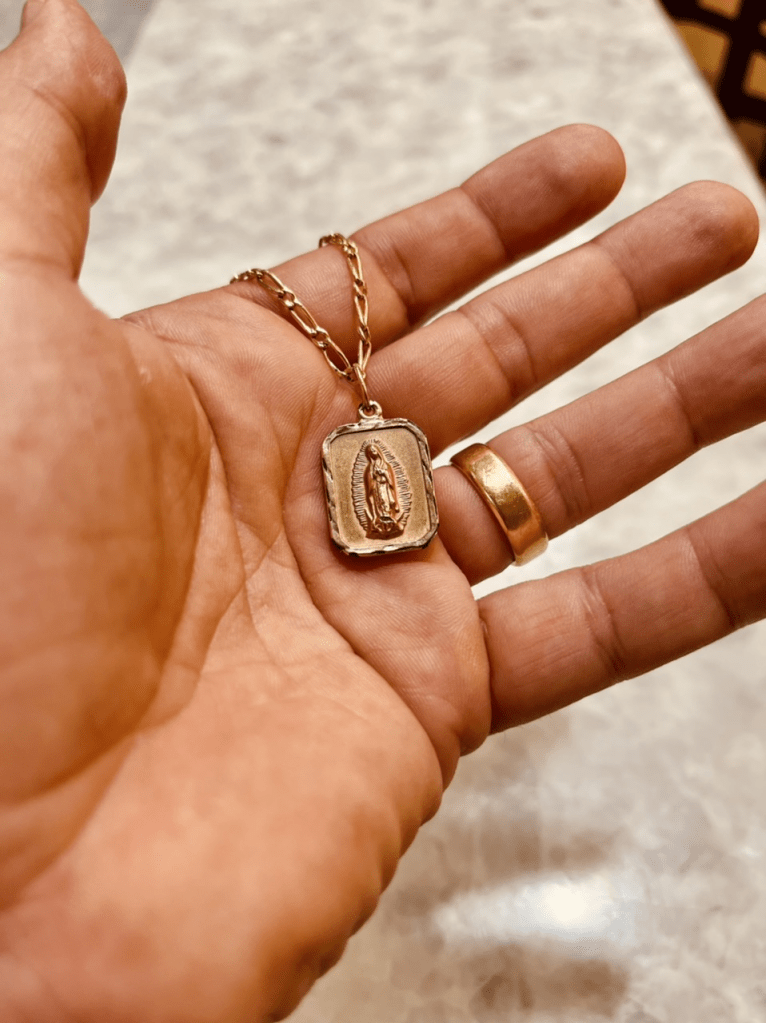
The first piece is about the Virgen pendant I got for my thirteenth birthday. The second is about a life of stages of faith & doubt, but a life where the Virgen endured as a light & an example.
Ave Maria. Por vida.
VIRGEN.
On my thirteenth birthday, we crossed the border. Starched guayaberas
& dress slacks, shined shoes reflecting the high summer sun.
As often happened when we were down in the valley,
we occupied an entire room to feed the extended family.
Passing elote stands &  kids selling chiclets, a neighborhood dusty
& busy. In Miguel Alemán, we were comfortable but conspicuous.
Clearly there for the day. A luxurious & easy crossing,
lower prices & local color. We took up the whole
sidewalk, loudly, happily. My gran'pa paid for the whole thing,
including this Virgen I wear still. "Mi'jo, que dios te bendiga."


AVE MARIA.
Before I grew into doubt & anger, disappointment & disgust
with the church, I prayed daily to
Virgin Mary.

She was calm & beautiful, her pain serene,
not a crown of
thorns.

Let it be done to me--disarming
service & bodily yielding, faithful, maternal & beautiful,
clothed in the stars & sky, atop the moon.
Pray for me, Mary. I will be good.

*******

This blog post is part of the #31DaysIBPOC Blog Series, a month-long movement to feature the voices of indigenous and teachers of color as writers and scholars. "Virgen" arose from an exercise with students--one memory, ten lines, ten words each; "Ave Maria" from another exercise--one object, ten lines, line length depending on the digits in your phone number. That is, if your area code is 214, line one is two words long, line two is one word long, and line three is four words long, etc. Here's a thing I wrote for the series a few years ago.

Please CLICK HERE to read yesterday’s blog post by Agnes Lopez. Please CLICK HERE to be uplifted by the rest of the blog series.
This is the place it happened. It was here.
The two of them in someone else's nice neighborhood,
walking down the steps to the water. The young man kneels.
This is the place it happened. It was here.
The young woman smiles & cries. She says yes.
They hug & kiss. They make each other a pledge.
This is the place it happened. It was here.
Soon everyone will know they're in it for good, for life.


This draft has two inspirations. The first is Joshua Mehigan's "The Crossroads", a perfect triolet from which I borrowed the first line. The other is Yi-Fu Tuan, who reshaped the way I think of space & place. My then-girlfriend & I had designed just the right engagement ring for her, for this moment. The jeweler finished it a week early, and we both rushed to the store to make sure it was just right. Then I drove to this spot, a nice neighborhood where we used to walk, in Dallas. We both woke up that morning not knowing that today would be the day we got engaged.
When I learned about love,
I was on my knees,
praying for mercy & wisdom.
I believed what they said:
G-d listened, and G-d cared.

I grew to love myself,
to open my heart (late).
The right girl found me
and waited, and led me
to believe again, believe anew.
The challenge for this one, I think, was to stick to five-line stanzas or five words in each line. Every time I write about my wife, I’m tempted to use that image above..
There are certain items in my parents’ house that are downright totemic.
On a shelf in their study, an official US Post Office scale from the 40s, its elegant detailed dial stilled after decades of bearing & measuring the heft of countless packages, ounce by ounce. My grandfather’s–my dad’s dad.
Under the bar connecting the kitchen to the living room, an iron & smoothed wood sewing machine with a still working foot pedal from the 30s, a real conversation piece. Miles of fabric have burnished the metal guide brackets to a crisp silver gleam. My grandfather’s–my mom’s dad.
Two men, fifteen miles apart their entire lives. Lives of honest work with their hands, with these tools. Work the town depended on, where everyone knew everyone by first name. Generations along those dusty Starr County streets.
And then there’s mom’s molcajete.
Boutique kitchen shops sell the smooth white marble variety, a device better suited to a medieval apothecary than a Mexican kitchen. They call it a mortar & pestle. We call it a molcajete, although technically it’s supposed to be called a molcajete (the bowl) and a tecolote (the grinder). I’m not going to call it that–we never did, never will.
People walk by the molcajete there on the kitchen island. (What a lovely word for this space in our homes–island. I don’t know what they call it in other languages in other homes. This spot that isn’t the fire, isn’t the water of the kitchen. An island of food in the ocean of family, an island of fecundity & fellowship.)
On the kitchen island, a squat rough small volcanic thing. Look close & I’d swear you can see remnants that can never be ground or washed out. Maybe a sharp corner of anise or an eyelash-thin thread of a garlic peel. The pepper pops under her strong loving hand, leaning her whole body into the rotating motion–deep from her shoulder through the palm of her hand, willing the pieces unmeasured into perfect proportion. Decades & generations of family later, everything she creates is always just right.
The rice begins to steam. Mid-conversation, mid-instructions to my father, she sidesteps from island to flame, scraping the pasty earthiness into the pan. A quick stir and then back to the sink. A tablespoon of water to eke out the last little bit before the onions & peppers get sliced and added. My sister & I argue over the rice that gets overdone at the bottom of the pan, the rice that peels off the rest like its own thin rich bloodbrown cake of flavor & motherly love. (She overcooks it deliberately now. Just for us.)
And after dinner, it sits where it began, a low peak on the center of her island. Pockmarked & uneven, blackened & alive, fragrant with the subtlest power.
You'll be tempted to (you'll need to) talk to others.
They'll be tempted to ratify what has happened.

They'll tell you what was wrong, what was not worth loving.
They'll remind you of all the bad times--ignore them.

Take this time to do what seems the least natural:
Make sacred the things that always were (are) sacred.

Curate & cherish what it was like to love her.
You'll have nothing but time for anger if you choose.

Choose instead memories that water your dry heart.

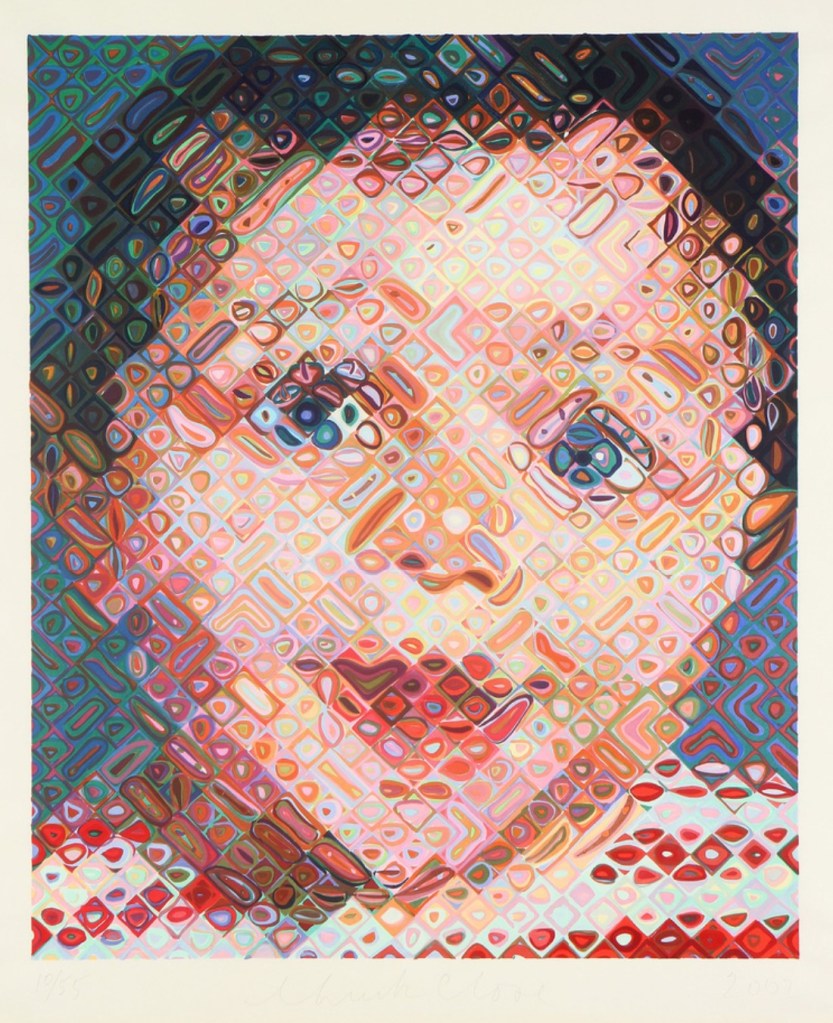
Thanks to Ruben Quesada for the guidance & the challenge of writing a paragraph on heartbreak, and then making each sentence an Alexandrine. The image is Josef Sudek's The Window of My Studio.
After covid, this must feel so different, the
block schedule, getting off zoom & back in the
classroom. He's so happy when he
does his work once it's assigned. We
expect that he'll have some late nights--but for school.
Free period he plays chess in the locker room? I mean, his
grades are strong, his attitude is good, and we're
happy for him. He should be proud.
In a few months, though,
Joel, he needs to
know that it's high gear time. Who will write his
letter when all they see is him playing chess? Her
mother & I are proud of her grades, but
now is the time to find an office
or club or something to show she took on a
pinnacle experience somewhere. Find it
quick, but make sure it's a thing you love ...
robotics or service or an AP ...
something you really love. It's
time to step up. Colleges &
universities are looking. When's your first college
visit? I just don't know
what we should be doing. There's no
excuses anymore--you're not a freshman.
You are a gift to us, Mr. Gar-
za. Have a great day.




 middleagedmiddlechild.