
“From January 12, 1992 to June 4, 1996, I traveled in India, England, and the United States, interviewing Indian women of diverse ages and backgrounds. […] I asked these women — strangers I met in theaters, forests, laundromats, temples and diners — to respond to […] twelve questions” Bhanu Kapil, from “Introduction” to The Vertical Interrogation of Strangers
- Who are you and whom do you love? I am a father, a husband, a son, a brother, a teacher. I move through each day from love to love. Once I voiced my love(s) sparingly. Now everyone must deal with this love in some way. I say it often–you are loved, I love you. I’m no longer afraid of saying it. I’m only afraid that if I say it too often, people will stop believing me.
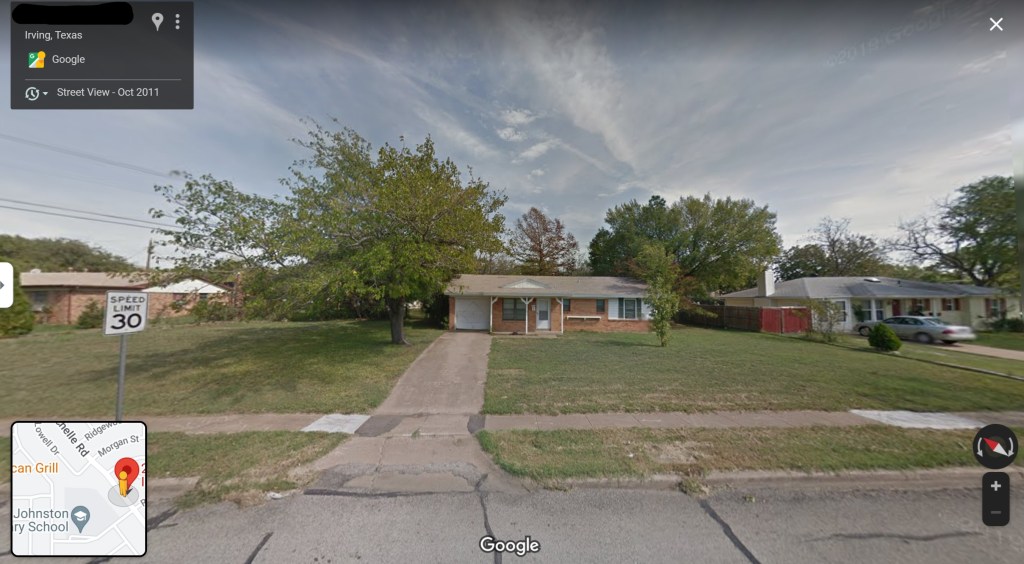
- Where did you come from / how did you arrive? My compass points south to Starr County, TX. I’ve never lived there, and we arrived so long ago that it makes no sense to think of any part of my story as immigrant story. 1540something made us New World people; 1848 made us Americans; 1973 made me a Dallasite, apparently, for good. My children know nothing (yet) of these beginnings.
- How will you begin? I will begin with a glass of water, then a shower, then coffee. I will go to bed to bed, kissing my children awake. They will be angry. I will shave & shower. Most days I match my belt to my shoes, my watch to … something. I will be in a hurry. I will begin as I am, slowly. I will miss a patch of stubble under my jaw. I will rub the corners of my eyes for a couple of hours — keeping my hands off my face & eyes is the hardest part of covid.
- How will you live now? I will not drink alcohol on a school night (unless there’s a really good movie). I will ask my wife frequently how she is. (She is working. She is busy.) I will tell my kids how proud of them I am, and I’ll remember a post saying that I should instead say how proud they should be of themselves. I will reconcile myself to not understanding them sometimes. I will be frugal long term but reward myself often in the short term. I will be clear & fair, patient & kind with my students. I will earn while I can, while I’m seen as innovative or progressive or smart or available.
- What is the shape of your body? It is as strong as it’s been. It only hurts when I sleep somewhere else. It shows some signs of decay & aging but not many. I can still go most of the day without thinking about my body, trusting that it will be of use. No pills, no canes, no machines, no fuss. For now.
- Who was responsible for the suffering of your mother? There was a war, a long war, before I was born & right through the first years of my life. It was on the other side of the world. My dad made it there & back. Twice. At least physically. It caused untold suffering for loads of mothers & wives, including my mother. That suffering seemed over by the time I was born. War’s wounds linger; even those healed, even those who survived, bear its scars.
- What do you remember about the earth? It warms you if you wait long enough. There are birds there. It’s teeming with birds, most of them very small, surviving on the smallest of things, sheltered by the smallest most delicate of homes they make themselves twig by twig, string by string, leaf by leaf. Such small beauty. I should have noticed them more.
- What are the consequences of silence? A lonely person stays lonely. A beautiful person might not see or know they are seen. A child might wither & suffer. A harried person might become a contemplative one. The questions & doubts have nowhere to hide.
- Tell me about dismemberment. [a solid twenty seconds of thinking] There’s a rotisserie chicken in my fridge. Warm from the oven not from life. The seasoning gets under your nails, and the dog is at your feet. A layer of fat(e?) & flavor. From one bag to another. Now it’s meat, the last vestiges of creature-ness gone. [wild non-sequitors] Mind from body. Child from family. Leaving home. Leaving husband. Leaving job.
- Describe a morning you woke without fear. The boy had snuck in our bed again. His open mouth breathing into my open mouth on the same crowded pillow. Must’ve been an hour like that — sharing / trading breath. This one [I have three kids] not afraid to touch or embrace, not one to shrink from my hands. Unabashed in his need to be comforted. I get up to begin the day, beginning with a confidence that is practically pre-thinking. I know so deeply that I don’t even have to think — that there is gas in the tank, that there is money in the account, that there is a school where my children are valued for who they are, that there is food in the fridge (so much food that [forgive me] we often throw some away), that there is hot water in the pipes, that there is a long list of numbers to call if I needed the smallest or biggest of favors.
- How will you / have you prepare(d) for your death? We should have done it sooner — the discussions & documents, that is. We had a mortgage & three (!) kids before we had a will. We had, however, some basic understandings: She knows I want to be cremated; I have no desire for a monument or plaque or stone anywhere; I know she’d want Rabbi P if he’s still alive by then. We relented and prepared to spend a shocking amount (“It’s … it’s a f7cking mortgage payment!”) on setting our affairs in order. A professional, not some online thing. One afternoon session in his office and one evening session at our dining room table (used only for special occasions). Scenarios both grave (brain death) and ludicrous — “If she runs off with the pool boy after you die … ” — meant to prepare the kids for her death, my death — “If he runs off with the pool boy after you die”. We all grinned, the post-its peeking out from the stack of papers indicating the tiny permanence of it all, a notary seal in a little bag, a surprisingly direct legal process–who, what, where, when (we know why). Person X will raise the kids, persons A, B, and C will get the money. Persons A, B, and C will be okay because of Person X.
- And what would you say if you could? The day will usually be beautiful in some way. Looking someone in the eye gets easier. Salted butter & olive oil will yield even better tastes than even the sharpest flavors if you train yourself to these elemental, ancient gifts from the earth. So will silence. And wonder. And prayer. The day will usually be beautiful in some way. Or you can make it beautiful in some way. If for no one but yourself.
[This is a project my juniors & I do each year. These twelve questions, two minutes each. Students may skip a question if they wish. Although Kapil’s questions weren’t written for me in mind, responding to them has meant a lot to me & my students.]



 middleagedmiddlechild.