These days my mornings
begin outside with the sun
in my face. Texas
makes this difficult most days
what with heat and mosquitos.
But it’s a habit
now -- a tan line on my nose
where my glasses sit.
“Here’s another day,” I think.
And here too am I. Thank God.
The day's first email --
subject line: "Confidential."
A kid in crisis
is bravely getting some help.
Looking up from the email,
I see her come in
like it's just another day --
which, I guess, it is.
Still, every word & gesture
becomes a sign, a warning.
If you or someone you love needs help, please know that there are resources out there. This is a kind of tanka poem. Sorta.
Far down the page --
past news of war,
past opinions
& perfume ads,
past covid charts
& thinkpieces
(this one about
arctic penguins) --
"Rain Boots We Love".
And I recall:
It's April now ...
spring has returned.
I saw it just
today, parking
under budding
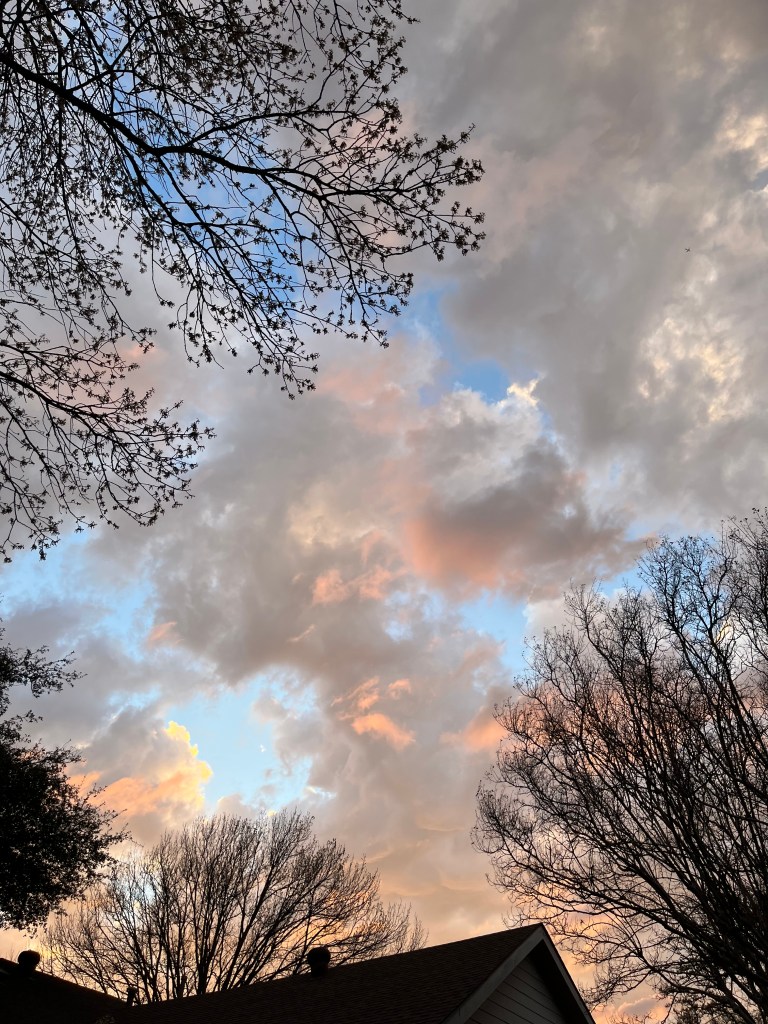
trees -- a sky grey
with the promise
of that patter
that redirects
human focus.
And tomorrow
all of the girls
will reach way back
in their closets
for the right shoes.
Pulling bootstraps
over bare legs,
toes & soles gleam
wet & bright with
long awaited
rain, finally
just underfoot.
This was written in response to a challenge to compose a poem based on a news item.
I was the first in my line because I was the shortest boy.
Across the aisle, Claudia was at the head of a long line
of girls in white, veiled & serene, palms pressed in prayer.
Two by two, we received the Body of Christ & returned to the pews, solemn, sacramental. Later, a man leaned over me, his hand
on my shoulder. "Now you're one with God." I thought I already was.
This one is anothercherita.
Once we hit the highway, she said, “I think we should get married.”
Two hundred miles from home. No stops planned. No one else in the car. No way for me to avoid what this lovely girl said.
Three hours, two people, one question: How much longer did I need
to know that she was the one? One thing I knew for certain.
She knew how to pick the right moment -- and for her, the right guy.
This is a cherita, that is, a six-line poem that consists of three stanzas — one line in the first stanza, two in the second, & three in the third.
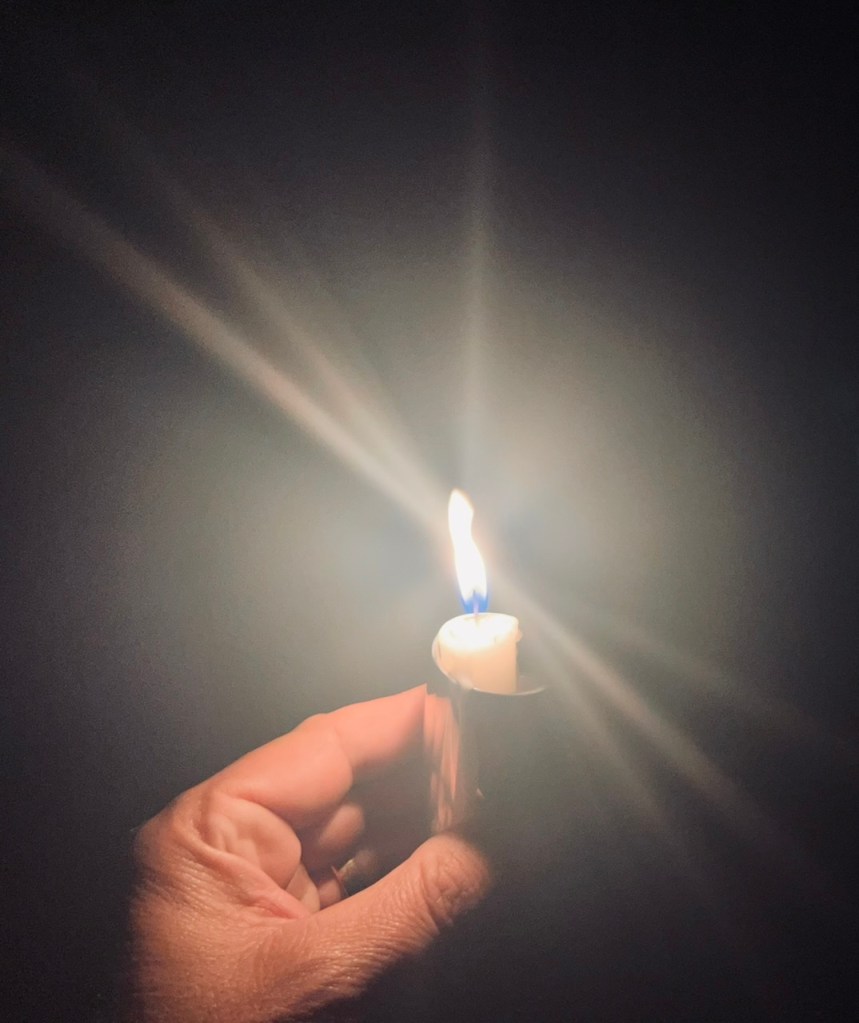
A match aflame
is held aloft.
Fire focuses
the eye, the mind.
But these eyes aren’t
a match. A flame
won’t catch these eyes,
any of them.
The field once green,
now roaring from
a match, a flam-
ing horizon.
Make a wish. Then
a quick escape.
Behold, beware
a match aflame.
This poem is my response to a writing challenge--four stanzas of four lines each, four syllables per line, with one line repeated in lines 1, 2, 3, 4 of stanzas 1, 2, 3, 4.
i've underestimated
the pleasure of things
catalogued, things put in place.
to know that we agree
"this is a badger. this is not
not a badger" satisfies
like a well built
chair. rest & know
that we can rest & know,
that the cataloguing, the naming
can be beautiful, that a name
can fit & fit well.
we can even refit, replace:
firefly. lost love. still life.
artwork. plaything. like
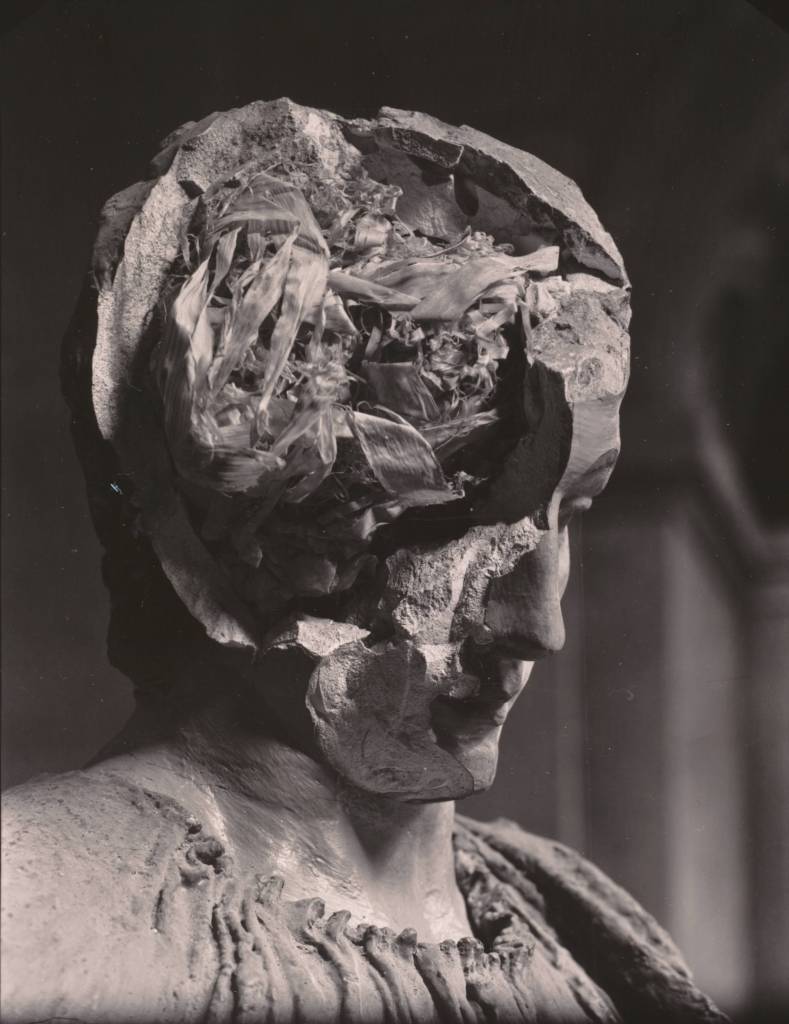
this girl in her place,
still, pale, except
the color of life on
her mouth, the glistening gaze
behind the brittle thicket
surrounding, adorning her.
the babe in the wood,
aflame in twigs, clothed in
dried delicate proportion,
packaged & shelved,
awake & alert
to all on the other
side of the glass.
This is an ekphrastic poem I wrote with my students, that is, a “a vivid description of a scene or, more commonly, a work of art.” Here’s another one I wrote about a mobile by Alexander Calder.
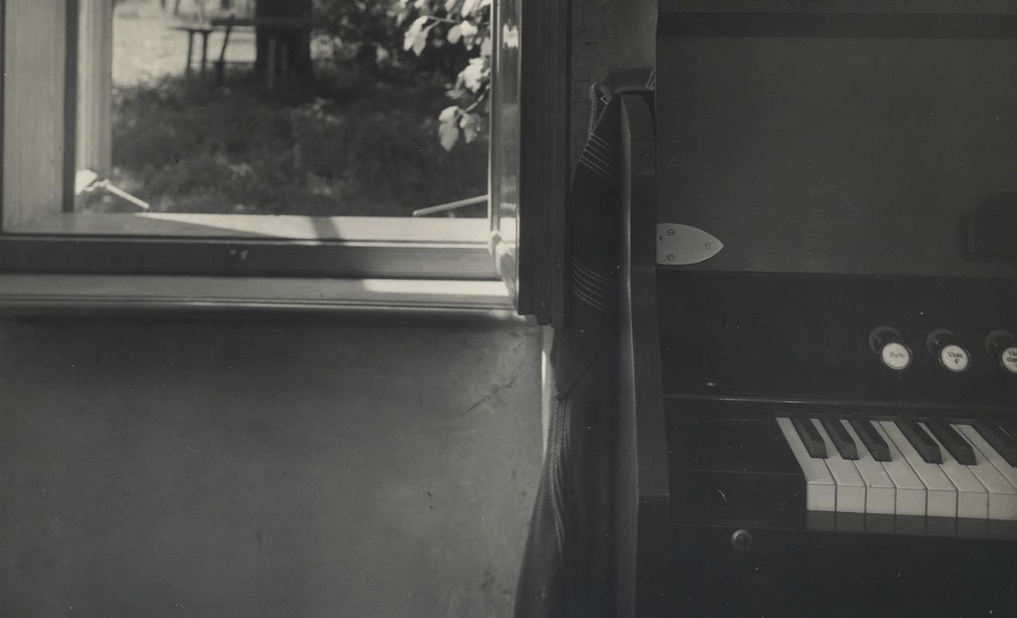
before a melody, a mood,
rolling waves of sound, resolution always
imminent,
all connecting a
network of
electronic ethereal lines.
now the voice—
open to dreams, to horizons.
keep clean, keep communicating, keep being funny & nice
from this day forward
keep the past in the past, keep your jealousy to yourself
for richer or for poorer
max out your 401k, decide who pays the bills and how, share taxes, share accounts, don’t buy anything <$100 without checking in with her
in sickness & in health
exercise, wash your hands, don’t expect thank yous for loading the dishwasher. learn to cook. learn to snack. drink moderately
for better or for worse
you’ll think some wrong & petty things a lot — keep it in your head. learn to make sacred everday tasks, everyday beauties — the smell of her hair, the smoothness of her cheek, the calming & ennobling presence of family, the loyalty she shows friends. the love she gives you unearned
till death do us part
learn to care for her. learn to anticipate her fatigue & her worry. learn to be gracious in the little that you do. one day you’ll be reduced to a body to maintain not a personality to cherish, not a coparent or a partner. one day you’ll need help in ways you can’t imagine, in ways that you won’t notice or recognize. one day it’ll all be over, and you will have lived well thanks to her, thanks to these words today. be happy because you’ll leave her as you found her. beautiful, strong, wise, clear brown eyes, soft skin.
Inspired by Jamaica Kincaid & Lupe Mendez. The title alludes to the wedding vows in a Jewish ceremony–“Ani L’Dodi V’Dodi Li.” Roughly, “I am my beloved’s, and my beloved is mine”, from Song of Songs 7:10.
I:
Daniel was the son
raised in the valley. A bucket for a
swimming pool. Air conditioning was
hosing down the cement porch,
waiting for a breeze. Him and Mom,
Granny and Papá Romulo.
Then Dad returned from the war. That’s all
I know of the war.
His return.
Raul was raised in San Antonio.
Daniel & Raul,
speaking Spanish, singing boleros,
eating raspas, and parting their hair on the side.
Los hijos de Junior y Noelia.
Tan joven, tan guapo.
They knew the valley, they knew
the language.
I came late. Learned late.
I came each summer
to Granny and Papá Romulo.
Dad in the reserves, Mom with us.
Two weeks to watch
and learn late.
II:
Fairgrounds Road
Rio Grande City, Texas
I climbed the salt cedar
each morning. I could see
Roque Guerra school,
where Mom learned
English. Dogs unleashed,
dust and dress shops
and the panadería.
Papá whistled. I climbed down.
Past the cement porch,
past Granny hanging sheets
freshly wrung, flapping and damp,
between the pomegranate trees,
Javi watching from
the other side of the chain link fence,
(sin hermanos, pobre de Javi)
to a row of bricks in the backyard,
to Daniel, Raul, David, Martita,
and Papá Romulo. He had made
us slingshots.
He sets up the cans, his heavy step
crunching mesquite pods.
We take aim.
Pebbles ding the bricks,
bounce in the dust,
Javi watches from
the other side of the chain link fence.
Pull, aim, miss. Calmate, mi’jo.
Pull, aim, miss.
Fijate, mi’jo. His weathered thick hand
on the slingshot now. Dress shirt and
dress pants, thick lenses and Three Roses
pomade, but a face and a gaze pure Olmec.
Fijate, mi’jo.
One pebble,
one shot.
A can falls.
Papá Romulo, stepping heavily,
back to his fading aluminum
lawn chair. Grinning, rolling a Bugler.
(The bricks were put to better use
when the house burned down on
my eleventh birthday in 1980.
I was there.
Papá Romulo learned to make do
with his left hand after the stroke
in late May, 1985. Raul led us
down the hospital hall, fighting back
tears in his cap and gown.
Papá Romulo, face drooping,
voice powerful & phlegmy,
letting Raul know how proud
he was, how loved he was.)
III:
I haven’t been to Fairgrounds
in twenty years. It’s not ours
anymore. I drive
past it, past the peyote dealer,
past the bougainvillea
and unlocked trucks
and picket fences
and hand-painted signs for
businesses long gone.
All the way to the cemetery
on the left. Where my cousin
Netito patted my shoulder,
as we carried Papá in his casket.
Where Mom and Tío Israel cried
and sang. Where the dust covers
plastic flowers and prayers
etched in stone. Where I went
the day after Thanksgiving
in grad school (just
to pay respects) and wound up
with my Tía, slicing apart
a hose tucked in the weeds,
to siphon gas from her car
to fill the borrowed lawn mower.
We can't leave it like this, mi’jo.
Dusty, dirty, like a parking lot.
The mower kicked up whirlwinds.
I gathered faded silk flowers
blown from nearby graves.
We stood under the mesquite.
She cried, and I slapped my
jean jacket clean for
the drive back to Dallas.
IV:
My closet has vintage
skinny ties & guayaberas,
safe from the fire. I still wear
the gold Virgen they put
around my neck in 1982.
I’ve never removed it.
I look at the veins in my hands,
more pronounced each year,
and see Granny’s veins,
her olive skin. Your blood
is bouncy, I’d say, poking
her veins and laughing, my head
on her shoulder, her hands
on my lap.
Our hands, our blood,
write now, right now.
V:
They lied once a year,
Granny and Papá Romulo,
each April inflating
their income for the honor
of paying taxes. Their city is named
after a river that they never crossed.
They lie side by side,
under a mesquite tree
at the far end of
Fairgrounds Road.
A slightly different was originally published as part of the #31DaysIBPOC Blog Challenge in May 2019, a month-long movement to feature the voices of indigenous and teachers of color as writers and scholars.