After covid, this must feel so different, the
block schedule, getting off zoom & back in the
classroom. He's so happy when he
does his work once it's assigned. We
expect that he'll have some late nights--but for school.
Free period he plays chess in the locker room? I mean, his
grades are strong, his attitude is good, and we're
happy for him. He should be proud.
In a few months, though,
Joel, he needs to
know that it's high gear time. Who will write his
letter when all they see is him playing chess? Her
mother & I are proud of her grades, but
now is the time to find an office
or club or something to show she took on a
pinnacle experience somewhere. Find it
quick, but make sure it's a thing you love ...
robotics or service or an AP ...
something you really love. It's
time to step up. Colleges &
universities are looking. When's your first college
visit? I just don't know
what we should be doing. There's no
excuses anymore--you're not a freshman.
You are a gift to us, Mr. Gar-
za. Have a great day.
I haven’t been great about keeping track of reading, or maybe I just need to reconcile myself to a method unlike my old one. Here goes some quick takes:
I’ve read a lot of memoir, and I’ve read a lot of border stories. And I’m still certain that I’ve never read anything like Javier Zamora’s Solito. I’ve taught excerpts from Unaccompanied, Zamora’s debut poetry collection, which focuses in parts on his journey north to join his parents already living & working in the United States. Solito, however, is a painstaking recreation of that journey, complete with near-crossings, re-crossings, various groups & safe houses & coyotes along the way. Short of walking the terrain oneself or experiencing Alejandro G. Iñárritu’s immersive artwork Carne y Arena, nothing will quite capture what you thought you knew of a border crossing quite like Solito will. Most importantly, how (despite the title) this is a shared experience, with collaborators & family members, with migrants & guides, all burdened with the same hope & fear, exhilaration & despair, fatigue & worry. Zamora animates & ennobles his memoir with the true account of three fellow travelers who became a kind of surrogate family. Truly unforgettable.
I am late to Louise Erdrich, and I began with Future Home of the Living God, a patient and engrossing novel (though not one as widely lauded as some of her others). It tells a story of unexplained social disintegration & the kind of grassroots fascism that grows most quickly & takes deep root during social unrest. The novel is narrated by Cedar Hawk Songmaker, the adopted daughter of a pair of big-hearted, open-minded Minneapolis liberals, and Erdrich stick to Cedar’s very limited first-person POV. We don’t know what exactly has happened to chickens & ducks, why archaeopteryx have returned, why Black & brown people are disappearing, why exactly pregnant women are feared, rounded up, & euthanized / punished / killed–but we do know that Cedar, pregnant with her first child, is being hidden & hunted. Erdrich makes believable to quick shift from neighbor to willing executioner, from life as normal to life or death. It’s a novel that satisfies more on the emotional (& at times spiritual) than social commentary level.
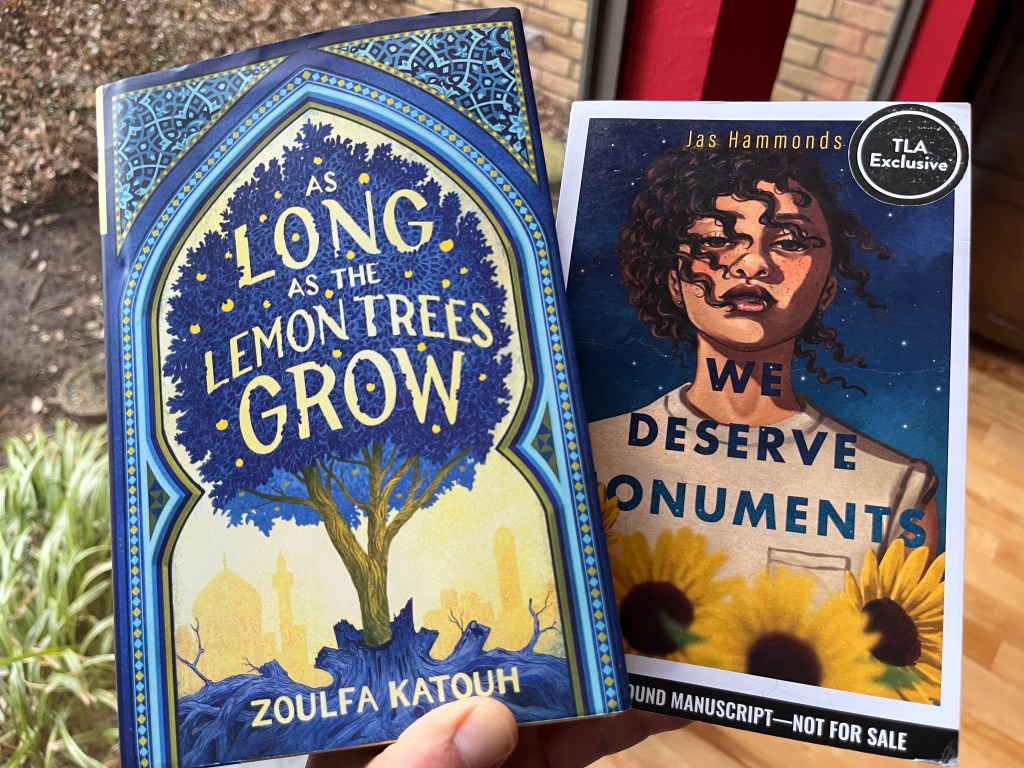
As Long as the Lemon Trees Grow by Zoulfa Katouh is a harrowing & haunting novel. Set in contemporary Syria, it blends stark realism with trauma-induced dreamworlds, the political horrors of war with the bodily sufferings of its victims, the rubble & unrest of Syria with the heart & hope of its people. Katouh focuses on Salama Kassab, a pharmacy student who has–through necessity–becoming something of a nurse, a doctor, a counselor … whatever is needed at the hospital at the time. While treating a young girl, she reconnects with the patient’s older brother, an activist via YouTube video and her near-match for an arranged marriage before the war undoes everything. It is a long look at a war still raging, one that slipped the attention of many Americans, due to events in Ukraine. In any time, it would be a necessary look at maintaining one’s humanity (not one’s moral perfection) in the worst of times.
I audiobook-read & loved Angeline Boulley’s YA thriller The Firekeeper’s Daughter. And I’d highly recommend the audiobook here, due to Isabella Star LaBlanc’s authentic & tasteful narration. Around the same time, I read an advance copy of Jas Hemond’s YA romance / suspense story We Deserve Monuments. It’s the rare novel that gets the messiness of family right and the messiness of young love right and the liminal spaces of American identity & ethnic / racial identity and the richness & sanctity of ceremony right. These two novels get all of it right in ways that any reader would love, including those skeptical of YA (like I used to be).
what lies beneath
illumines what's above

diaphanous weight
a statue baptised

the bracelet
a shining silver choice

the depths indistinct
no stones no plants

she is alone
and elegantly

out of place
ennobling what holds her

her body is not at rest
toes spread arms drifting

maybe we're all suspended
and safe, floating

facing what's above
listening to the depths
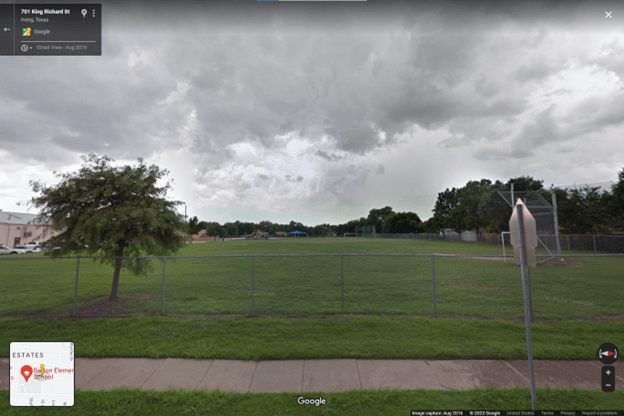
Green burrs grow there,
dandelions & weeds I can't name.
Cigarette butts & candy wrappers
catch low in the chain link fence.
You have to look up
to see what it meant
to me all those years ago.

Look up to the wide dry space,
for running, walking, daydreaming
a life of an adult you (never this one).

Look back to the line
of live oak trees along the fence,
thick shade for boyhood
summer days

and cover for stolen embraces
on the thin flannel sheet you didn't know
she had in her trunk.

Nobody saw you that night.
Nobody sees what you saw
back there back then.
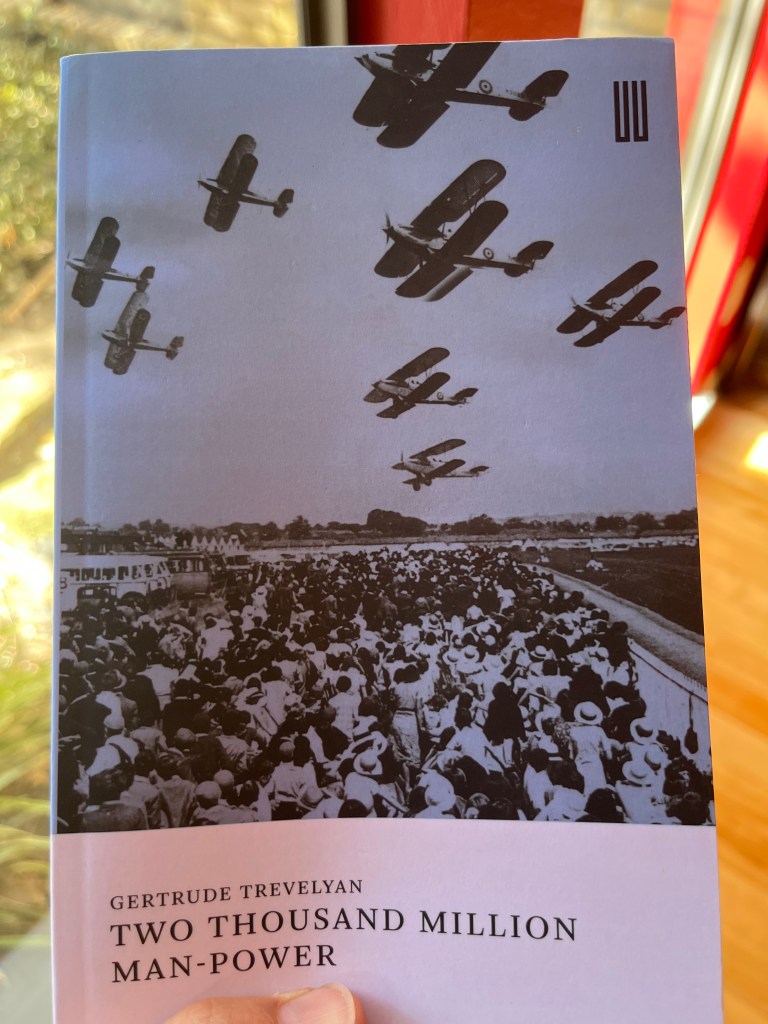
Okay, maybe Two Thousand Million Man-Powerby Gertrude Trevelyan isn’t exactly a classic. But in the words of her most recent publisher, “If [Trevelyan] was a bloke, she’d still be in print”, some eighty years after she died.
It’s a novel that isn’t helped by its title, until you read the opening pages of Trevelyan’s novel and see how labor & human dignity, labor & human necessity are centered in the story.
Set between 1919 & 1936, Two Thousand Million Man-Power tracks the fortunes of Robert & Katherine, a chemist & a schoolteacher. Each just beginning a career or a life that could possibly be a career or a life of the mind. Every day, Robert, a recent graduate, works in a lab for ladies cosmetics, and every evening, he takes notes on a theory of time he hopes to one day complete. Kath has narrower ambitions but thinks big, mostly thanks to big dreamers around her, like Robert (and like a colleague who invites her to communist party meetings). Their courtship is slow & thoughtful–they attend weekly lectures–and it is bound by convention, which means they must sneak around in order to spend evenings together. Either due to true love or historical necessity, they get married. It is hopeful for a time.
It’s an honest love story–which includes daily pettiness & small joys, struggles over shared money & individual hopes, friendships & unavoidable comparisons with couples outside one’s relationship. It is deeply realistic about the loss of youth and the allure of materialism / comfort. It’s very nuanced & ambiguous about politics & history, cities & work, communities & countries. And it’s got a perfect ending.
Before I grew into doubt & anger, disappointment & disgust
with the church, I prayed daily to
Virgin Mary.

She was calm & beautiful, her pain serene,
not a crown of
thorns.

Let it be done to me--disarming
service & bodily yielding, faithful, maternal & beautiful,
clothed in the stars & sky, atop the moon.
Pray for me, Mary. I will be good.

In some ways, I've written about this part of my life before, most evident in the Virgen de Guadalupe pendant above which I have worn since I was thirteen. but never with these parameters, where each line length is dictated by digits in my phone number.
The city restricts watering during summer, for good reason,
so the man tends the brown patches daily by hand.
Seven thirty and seven thirty at morning & at night.
He times each session each day down to the minute.

He gets to know his lawn intimately, patch by patch,
the narrow band right by the sidewalk nine feet long,
the yellowed oval that stretches out just behind the mailbox,
the tight corners near the turns by the lawn lights.

His fist around the hose, his thumb widens the spray,
the mist cooling the only man outside this hot night.
Sometimes cars pass him, their fingers lifted in a hello,
their palms steering them down the alley to their garages.

On vacation, he worries about the lawn, patch by patch.
Over time all see the green return stronger than before.

Over the summer, I wrote a lot of watering-the-lawn poems. This one is kind of a sonnet, but with ten words per line rather than ten syllables.
The child enters.
"Knock knock" "Who's there?"
The father wonders at
the enduring appeal of jokes,
the older we get
the fewer we hear.

The child grins through
the setup, knowing that it's worked
all day long
friend to friend
playground & cafeteria,
a center stage moment
he's rehearsed & honed.

The child delivers the punch.
There's more ah than ha
at first before the father
shifts from discovery to joy.
They laugh together.

Let there always be
shared moments like this,
an assurance for each,
a luxuriating in who's there
and why. May the doors
to their hearts always
be open to each other.

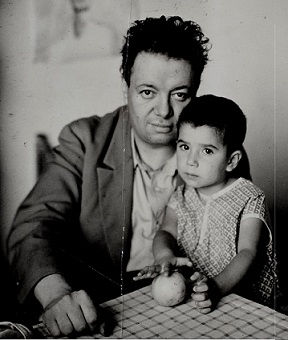
This is inspired by a writing challenge that Matthew Olzmann gave my students--write a poem that begins with a joke and ends with a prayer. Photo of Diego Rivera with his child here.
May your feet be warm & dry
May you hear your name said with a smile today
May your nights be peaceful
May your work be meaningful
May someone you love think that you are smart & funny

May your coffee be served just right
May you see your child laughing
May you enjoy the book you're reading -- and the next one
May you feel the warmth of the setting sun

May your children be safe & happy
May they grow up to love & talk to one another
May they have dogs & beloveds that love dogs
May the clouds always inspire you

This is inspired by a three-part writing challenge that Sarah Freligh gave my students--write blessings for all people everywhere, then blessings for someone difficult to love, then for yourself. The image is by my friend Scott Lewis, from his series God & Globalization.
For four years, I tracked my reading, and as a result, I got to the point where it’s kind of a habit that I read broadly ([ahem] at least within literary fiction), that I read as much as possible in translation, and that I am deliberate about what I read next.
It’s been a while since I read R.F. Kuang’s Babel which I recommend enthusiastically. To aim to write a smart, accessible, thoughtful, & suspenseful novel is quite a narrow target to hit, and that one definitely did. Ada Limon’s The Hurting Kind is similarly smart & accessible, with a really gentle seasonal organization that never feels like it limits the poems. I reread Peter Carey’s True History of the Kelly Gang, which is an engrossing story about a man pushed too far and the lengths he’ll go to set the story straight (even if it’s not entirely factual). But this post is about a chunk of reading that’s a little more deliberate, a set of books that I hoped would get outside of myself.
Usna Aslam Khan’s The Miraculous True History of Nomi Ali is a historical novel about a place I’ve never even heard of–the Andaman Islands. Leave it to an independent press (Dallas’s Deep Vellum) to take a chance on a novel like this one, that deserves a wide readership and will challenge anyone that picks it up. Khan’s Nomi of the title is not the main character, nor is she explicitly any more of a witness or a survivor than her brother Zee (who suffers a terrible fate due to a single courageous act) or her father (bent low, literally, by his punishment for a crime he committed, which brought him to the islands) or her mother (who suffers losses that eventually become unspeakable). Khan makes the reader feel deeply about almost every character, no mean feat, given that some of the colonial administrators are complicit in, at best, cruel & unusual punishment. This might fit under historical fiction or post-colonial literature, and in ways that test the limits of each genre. It is a novel in which the bravest act of all is staying put and trying to find the beauty & the humanity around you.
I’ll update this post when I finish Rodaan Al Galidi’s light-hearted (or is that deep-heared?) refugee novel The Leash & the Ball, Melody Razak’s debut about 1947’s Partition Moth, Ingrid Rojas Monteras’s memoir about a journey into her family’s history in Colombia The Man Who Could Move Clouds






 middleagedmiddlechild.