When you enter the gym, you'll recognize
a lot -- the shine of the floor, the height
of the rim, the high squeaks of feet
picking & rolling. A whistle will pierce
the air, and you'll gather, a rough
semicircle, hands on hips, game faces.

A face not unkind, a voice slightly
too loud, dressed in colors you hope
to wear. He'll tell you (probably a he)
that some of you won't make it.
And maybe for you, it's as if he's
teasing, mocking, as if he's certain that
you won't make it. So you
run and you throw
your whole body in.
Focus, push,
pass, repeat.

What you fear will not go away. Let
me take it on for you. Let me worry
and sweat, all nerves & hope seated
among the other dads, watching the next
team assemble.

Go. Play.

This is more a mantra to future-me than a message to my unafraid athlete son. Shamelessly modeled after William Stafford's "For My Young Friends Who Are Afraid".
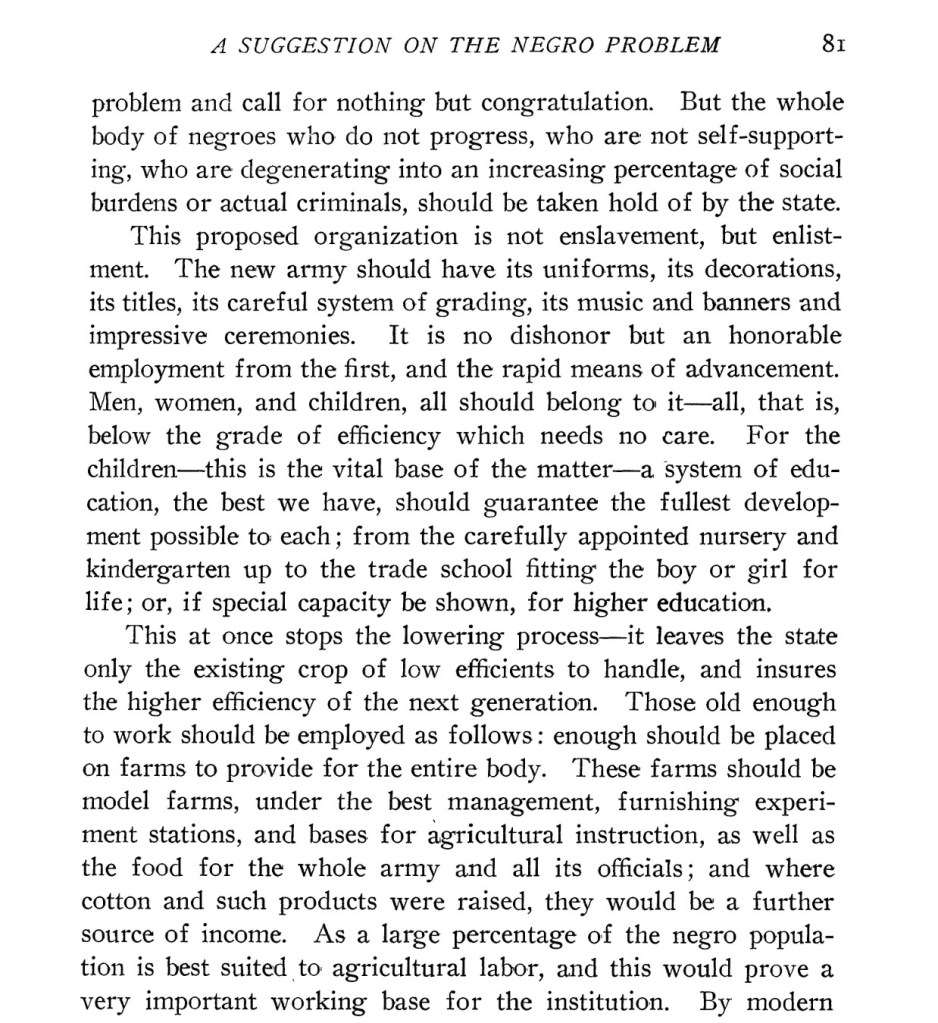
Race in our age is admitting that we respect advantage, that progress is grievously laid aside. Society developed, yet man senses proof of a force all our fault — degenerating, criminal, rapid.
Children shown the existing body learn and work the new body.
Work and honor free entire groups. Unorganized people govern not. The body politic is taking labor, light, and care. How are profits superhuman? If all ages withdraw cooperation, a fair and free home should make all rise.
Today I’m posting my first ever blackout poem–that’s it up there. Seven sentences gleaned from eight pages. I’m not wild about it.
As a high school English teacher, I’ve been tempted to do blackout poetry projects, but I’ve wanted them to mean something, to be an exercise of true rewriting of text rather than a “fun” standalone lesson on an anodyne subject. As a high school teacher, I’ve also taught Charlotte Perkins Gilman’s “The Yellow Wallpaper” a lot. But I didn’t want to blackout a feminist text. Instead, I worked with Gilman’s 1908 “A Suggestion on the Negro Problem“, an eight-page article in which Gilman imagines an enforced labor system of certain African Americans, those who can work factories & fields “without the strain of personal initiative and responsibility to which so many have proved unequal..”
Gilman’s “suggestion” goes into some detail about the alleged benefits and procedure for the state placing those Black Americans that “do not progress” into organized labor. I blacked out each page, aiming to preserve one sentence per page — but it didn’t always work. This whole thing nauseated me — not just the “suggestion” argued but the realization that in blacking out the word “Negro”, I was merely preserving a sanitized version of the racist, self-servingly modest, clinical voice.
With students, I’d lay the groundwork carefully — at the very least, defining & offering examples of scientific racism. I’d also need to prepare them for the content of the article, maybe even looking at the publication itself, maybe even searching its current place within the academic discipline. I’m not certain that many students are used to seeing racism manifest in this way. Not sure if I’ll return to this kind of thing again, but I’m glad I gave it a try, even though it didn’t work. Or maybe it did — I truly cannot tell right now.
He rolls up his pajama top,
    a signal to caress him,
    to sing him to sleep.
    Still young enough
    to need touch,
    still young enough
    to ask to be touched
    often.

I kneel & sing.

He luxuriates in the ritual,
    one of his own design.
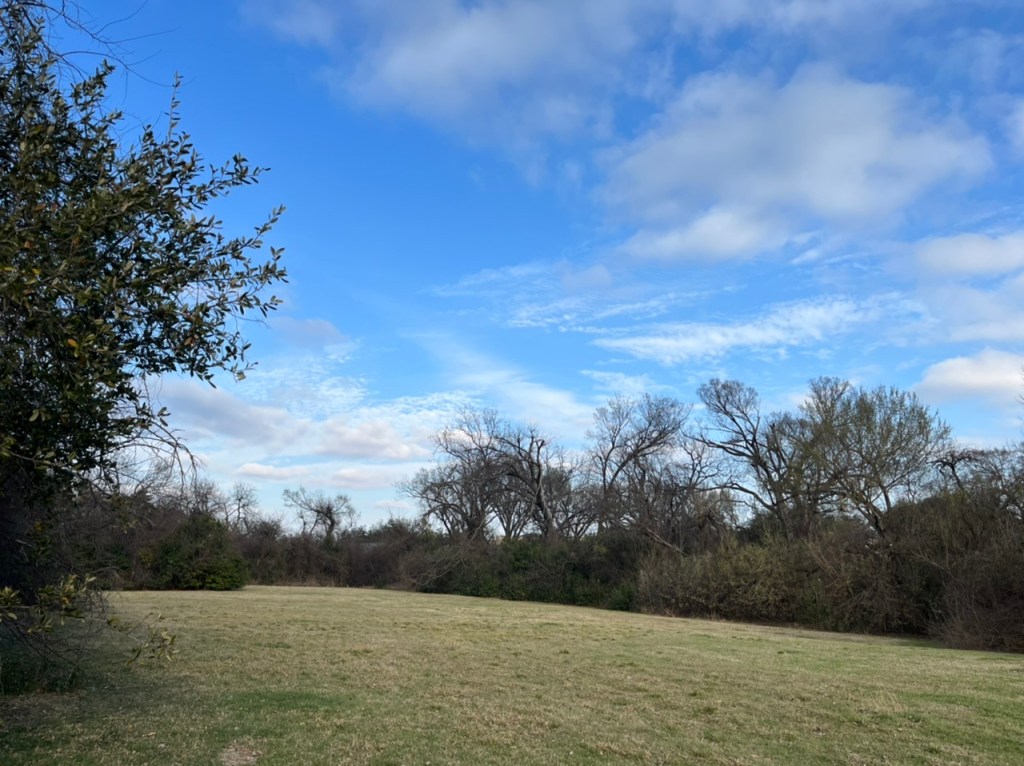
The field. March 8, 2022, between school & supper.
The boy stands before me, palming the ball,
wiggling it at me. "Dad. Outside?"
It's hot, I'm comfortable, but I succumb.
To the field.

Between our house & the field,
we toss the ball & watch for cars.
Then we're free. Surrounded
by the trees. Birds above nearly
drown out the leaf blowers.

He calls the play, & I
imagine a slightly future him,
throwing to an emptiness
he fills, an invisible target
he sees first.

I had almost lost the need to
sweat for fun, to daydream a
heroic me. Then the boy led me
outside.
The room is cold, and your wife is crying. And smiling.
There's a speck of blood on your cheek that you notice later,
      one drop, dried brown, from the fibrous cord.

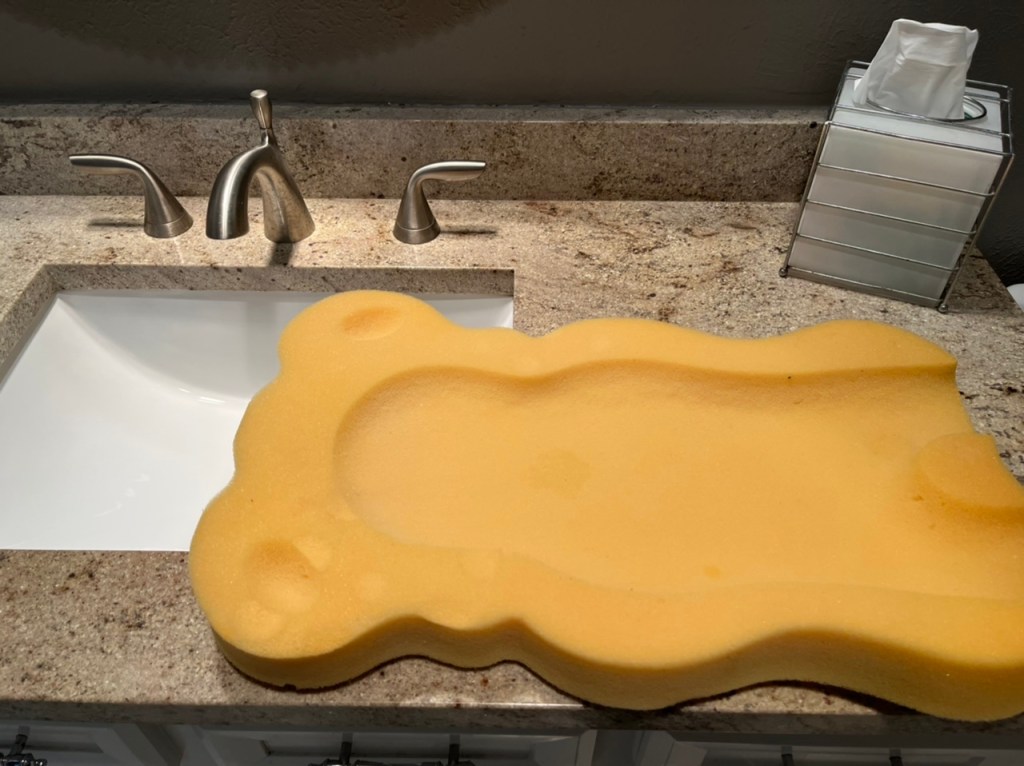
She wriggles in a shallow plastic box, cleaned & approved.
A striped hat, a diaper, a warm blanket, and an ankle bracelet
     with a magnet in it, connecting her to only the two of you.

She weighs almost nothing. Comically small in the new car seat.
There's a room at home decked out for her,
      a place that'll make us more than a couple. Now, a family.
In this house
I've learned the power
of patience. Of performed listening.
There are tears & there's anger. You're tempted
to solve it all or raise your voice around your children.
The fog of anger & the tear-stained eyes make them other beings.
And they're already good at turning the tables on you. They accuse, they
question, they recount quarrels in precise detail, each insult, each petty
unkindness brought to life anew. It all makes a frantic emotional sense.
So you listen & you soothe. If you're really strong, you make them
feel seen & loved. It's hard to live together sometimes.
It takes a power you didn't know you'd need,
you didn't know you had,
until it's there.

Inspired by page 115 of Candice Iloh's Every Body Looking. Really like the way this looks on a computer screen--not sure the lines ebb & flow the same way on a phone.
This is a (non-exhaustive) list of things that I do that annoy my wife:
When I am nervous, I laugh
Very often when I am certain that I am right about a thing, I am quite wrong about that thing
When I am full, I give her hugs & snuggles, no matter how busy she is
Decades ago, I told her that she was holding an umbrella wrong – she still brings it up
I rearrange dishes that she has already loaded into the dishwasher
Right before I fall asleep, I tuck my socks behind my head on my pillow just in case I need them during the evening
I regularly forget things about our life together
Sometimes if I’m telling a story that she knows happened on, say, a Tuesday, but I say that the thing happened on, say, a Wednesday, she will correct me, and (but?) I will continue talking as if it could have very well happened on a Tuesday or a Wednesday, all, Anyway as I was saying …
I ask for her help loading the washing machine we’ve had for 18 years
I once had a soul patch
I met her great-uncle Henry once at a wedding. After, like, ten minutes of me talking to him, Henry told her, “You’re lucky to have him” — she asked me if her uncle had also said that I was lucky to have her. Reader, he had said no such thing
[redacted ancient history thing]
I add that ’93 Snoop Dogg ‘izz to lots of what I say, to the extent that my own children say Harry Pizznotter rather than Harry Potter
Sometimes I put her used tea mug (which she leaves by the sink with other dirty dishes) in the dishwasher, when I should know by now that she is going to reuse that mug later
I follow behind her turning off lights that she’s just turned on
Just as I’m happily about to drift off to sleep, I pat her shoulder to let her know that I love her, which interrupts her drifting off
I can fall asleep on demand—like, if falling asleep were an Olympic event, I would be a gold medalist
I once broke up with her for a really dumb short-sighted reason
I exercise regularly
I sing along with songs but paraphrase the lyrics so that the song no longer rhymes
[redacted bathroom thing]
I am very happy when I wake up, like whistling happy
I whistle upbeat versions of sad songs—for example, a swingin’ peppy version of Les Miserables’ “On My Own”
My default song to whistle is “As Time Goes By”, which I have been whistling in her presence for nigh-on thirty years
Whenever she drives us home from a nice evening with adults where I’ve been drinking, I curse a whole lot on the drive, like, way more than is necessary, and I usually wind up saying “I was funny tonight” over and over
I am very particular about my coffee. I’m getting worse
Sometimes when I see her around the house and remember that I love her, I’ll just moan, “Oh mama” like she’s leaving on a long trip or something. She’ll interrupt what she’s doing to ask, ”What?”, and I’ll just moan, “Oh mama” again
I once had a beard
[redacted pretentious thing]
When she texts me, chances are greater than 75% that my response will be “Lordy Lou” or “Whatreyagonnado [insert shrug emoji]”
I am listed as a co-volunteer on loads of school stuff, but she does all the work
I yawn loudly
I claimed as my own a soft silk eye pillow that a friend gave her for a gift
I wrote this essay in August 2019, a tribute to David Berman (R), singer-songwriter, poet, and Greenhill alumnus from the class of 1985. The title quotes the penultimate line from “The Double Bell of Heat”, the closing poem in his poetry collection Actual Air.
By the time Erica & I decided that a long-distance relationship wouldn’t work, I had already taken possession of her John Lennon poster. I first saw it while stretched out on her futon in the West Campus house she shared with three other guys. John was mounted on foam board and resting on top of her low bookshelf. You’d be right to judge this Richard Avedon poster as just the kind of black & white poster that gets sold a lot in student union buildings every fall.
John’s body is a hulking black mass. Half of his face is shadowed. He’s looking right into the camera eye, blank, not challenging or accusing. The openness that, upon reflection, shows more about his comfort in the frame than his comfort with himself. He’s got a kind of long bowl cut, which at the time was either fashionable or shockingly long, depending on how old you were in 1965. I thought he was 28. (Turns out he was only 25.) I thought—and probably said—“That’s the image of a man just at the point of becoming a man. That’s an image of a time when you’re no longer a young man. You’re a man. If you’re not wise then, you might never rise to it.” I was nineteen. I thought I’d be like that myself at 28. And David Berman proved me right.
About twelve years later, when I was in my early thirties, I discovered DB’s poem “Self Portrait at 28”. I read it in such a way that he proved me right about manhood. At 28, you sometimes have to squeeze your life for good material. You find yourself in a room alone, reading and trying to make meaning. Even when alone, you imagine yourself in some difficult conversation with a woman, wanting to talk very plainly to her. There are things you would have given up on by then. You’ve got a sense that your vision, your experience, your voice might be everything.
I saw it in John Lennon’s face, I recognized it in the poem. Because I am an English teacher, I forced students to read this poem that I figured was right about something that I cared deeply about.
English teachers do that a lot—find a poem, and excitedly remove it from its context. Find a poem that makes sense to you, and compel young folk to prove you right about it. Students loved the discussions even when they didn’t really get the poem. So I decided to teach the poem in context, as a huge part of his collection Actual Air.
I hadn’t taught a collection before, just isolated poems, great poems. I was kinda beating myself up about it, teaching singles without teaching the album. The year was a mixtape, even if it was a good one. It was getting better now that I was trying to teach from the inside out of a work, to get deep into a writer’s choices and decisions and challenges. I lined up several writers to skype with my kids. Vanessa Grigoriadis told us all about gaining temporary trust of a famous person you were profiling. Mark Doty told us that he had a theory about the power of tercets and about how he thought the word “faggot” was on its last legs. So I figured if I was going to teach Actual Air, if I was going to get students thinking about their near futures, that I should set up something with David Berman.
July of 2009 I called Nashville information for his number, which shockingly was listed. I said “Yes” loudly to be connected automatically. Before I had planned what I was going to say, DB’s answering machine picked up. I left a terse non-fan-boy message. He called back a few minutes later.
“Yeah, so students really love Self Portrait, so I figured I’d teach the whole collection. Would you be up for talking to my students, skype or email or whatever—sometime in the spring?”
DB said yes, in 2009 and again in 2013. He’d answer anything. Provided that the questions came from the students. He wanted to connect with them, seeing as I teach at Greenhill, DB’s alma mater, the campus where he became a poet.
“I wrote my first poem just sitting on the carpet in the common area of the upper school. I started to write down these images in the back of my notebooks. Mrs. Eastus [who is thanked by name in Actual Air acknowledgements] actually took a lot of this writing and assembled it into a long poem for me and then entered it into a writing competition. That meant a lot to me. I never would have put that together on my own.”
So how did he become a good poet? my juniors asked.
“Well first you have to read a lot of great poetry. Then you have to read a lot of average poetry. Once you figure out what average is, you shoot higher than that. You have to be critical of your own stuff. The first couple years of writing isn’t going to be something you’re proud of later on. But you have to have those years and it’s alright to not realize how bad it is but you can never be easy on yourself. If you don’t revise, and cut, and do over, and improve on your original you’ll probably never be a poet.”
I’m so proud of them, looking back, at the what-did-you-mean-by-X questions.
Was there a Kitty? Yes, but DB gave her a different name in “Classic Water”—“She wasn’t my girlfriend but I was drawn to her. We went to see the Cure together in 1984.” Do you really have a little brother named Seth? “Yes. He’s actually my step-brother. He lives in Washington and designs bombs.”
And when they get to craft-specific questions that they probably asked because they thought I’d want to know, DB was as candid as you’d expect—“I’m always pretty much unaware of the sound of my poems. Those things [like alliteration and caesura] either happen or they don’t.” He made the students feel like just the kind of readers that he deserved—“I never had to explain that image before so I’d never explicitly made those connections until right now. I’d felt them when I came up with the image, but I hadn’t quite parsed it out, until you asked.”
And he’d sometimes write something so disarming, so lyrical that you half-expected to hear it sung on his next cd.
“I didn’t know how bad men were, until I became a (sort of) a bad man (for a little while). I didn’t know how good and kind women were in comparison.”
Like you, I kept an eye out for DB. Skimmed through his blog one week. Happened upon cartoons one day. Kept American Waterand “Rebel Jew” nearby at all times. And then like you, I got excited with the new material. DB seemed to have moved beyond being bad and good. He was, for the moment, just sad. And he had let us into his room, stretched out and singing on his bed. Showing off the kind of loopy tchotchkes you’d find in your favorite TA’s house.
And Wednesday evening, ten years after I first booked him for an email Q&A, the summer I turned fifty, before I had time to check on Purple Mountains’ tour, I get a text from Sophia, a Greenhill alumna. My wife Michelle—“sometimes I dream of Michelle / she’s the biggest part of me”—holds up her phone with another RIP text. Leaning against the safety gate at my brother-in-law’s pool, I fumble through my gmail archive, searching for answers, searching for his voice. I refill my red solo cup and tweet out “Rebel Jew” and our soccer coach reading Classic Water, Snow, The Double Bell of Heat. I copy the DB thread and send it to Hannah, a current student: “wish you could’ve met this guy.”
Michelle drives us home. I tuck my son in, the John Lennon poster above his bed. I cue up Purple Mountains and scroll through the emails again. One question from my 2013 class pops out. A kind of inevitable question from a student to an alum—what if you had it all to do over again. I knew about DB and the Al Gore suite in 2003 [where Berman first attempted suicide]. He had had it to do over again. If you had it to do over again, what would you change about high school?
“If I could do it again I’d make more friends more quickly. It took me half a year to overcome distrust and relax.”
And right at that moment, I heard him on my earbuds go high lonesome in “Darkness and Cold”, and I wished he had taken another half year to overcome whatever it was that drew him down. These days he had seemed completely himself—depressed but creating, on podcasts, in interviews. Seemed as grateful these days to be asked about his work as he did in 2013.
“[…] I get email through this address a couple times a week. If you have anything else you’d like to ask, please feel free to write anytime. Yasher Koach, David Berman”
I looked it up, of course—Yasher Koach. I wondered if it meant something about blessings, about art, about poetry, about youth. It did. It meant something about all of that. Yasher Koach— “May your strength be enriched”
On behalf of all of us who have learned from you, DB, thank you for coming back and for enriching our strength.
[If you or someone you know is thinking about hurting themselves, please reach out for help to a hotline like this one.]
Self portrait (2022) in engagement portrait (2004)
Now I've come to look at love
in a new way. It's a deep resource,
one that's renewable in surprises
& cycles. Dig fifty one-foot wells,
you're not likely to find water.
So you dig one fifty-foot well.

Now I dig deep, I know
what nourishes & refreshes,
what cleanses & glistens.

Go back to the well. Let loose
the bucket. Feel the rope go
slack in your hands. A long silence
as you wait & trust. The empty
vessel falling into the darkness.
A blessing you hear before you
taste it. A distant slap & splash.
You tug & jerk, cajoling it
to just the right angle
for a fullness of relief,
for a chance to drink
deep.

But take your time.
Hand over hand.
Too hasty a pull will upset
what you hoped for.


Inspired by, among other things, the gospels, Frost's Directive, and the opening of Sharon Olds' Unspeakable








 middleagedmiddlechild.