In every city, there's a room full of dreams
    catalogued carefully, nuances of emotion,
    scenarios you can scarcely imagine awake:
    Honeymoons nestled with lost loves.
    Anniversaries with chores forgotten.
    Illicit joy with family laughter.

They are alive & renewable. The city never runs out of dreams.

A map of the city is on a big screen, filling the wall.
    Streets & fields have been removed.
    A grid of addresses & numbers,
    rooms & beds. All accounted for.

A man in uniform drags each dream
    from the margins to a house,
    through the house to a room,
    through the room into a bed,
    the right side of the bed for
    the right dream.

He hovers, uncertain at times.
    It's artful & important work,
    work that takes root but not
    in the mind. Someplace deeper.

Does he know the false hopes he drops
    on unsuspecting people
    prone, disrobed, mouths agape?

Sleep tight.


I am not imaginative in the way that fiction writers are. Still, I tried my hand at a subject that I don't understand well, explained through a lens that's not mine, in a voice I don't use often. It's a dream vision.
my mother bruises
easily

cobblestones in San Miguel
felled her

i was there
but too far

to catch her
to hold her elbow

knee knotted
hand swollen

an inflated leathery
latex glove

her glasses hid
her color erupted eye

wine dark echo
dimmed & darkened

from the original
fluorescent burst

of the original fall
the first day

yellow green rimmed
the point of contact

right hand
outer knee

wrapped & clothed
unseen

her eye alone
bruised to the bone

reveals & reminds
me to

watch my step
& hers
PS She’s fine. Really. I saw her just the other day. This fall happened twenty years ago.
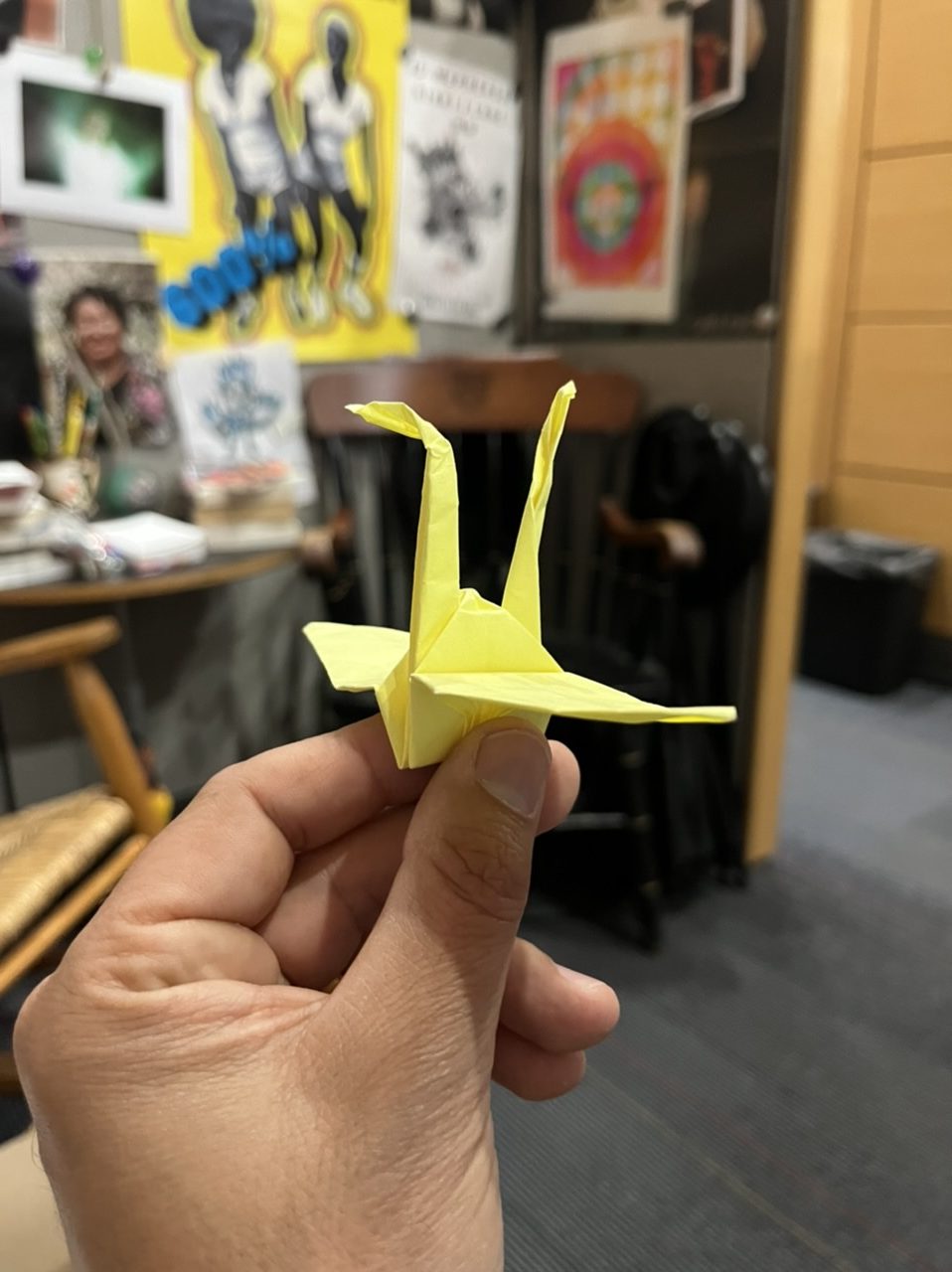
It’s not perfect. The edges are folded with near precision. More rolled than folded in spots, not quite the crease you’re meant to aim for.
I know how small the hands were that folded this crane.
I know the room where it came to be.
There was a lesson connected to it. The simplicity that could become art. The care that it takes to think & create in honor of a loved one.
The teacher says it’s meant to be one of a thousand. An insurmountable task, a severe & demanding ritual, the boy thinks, though he doesn’t have those words for it yet.
But, she says, the work can be shared.
At some point, the ritual in the class becomes automatic, hands moving independent of the mind. Eyes looking across the table at loved ones, looking back across at you.
The first folds the easiest. Paper pliant & crisp. You get the feeling you could do anything with it. And then the working area gets smaller, the sharpness muddied. That’s the other lesson.
How hard it is to bring a thought into being, how much work it takes to honor a memory.
In fourth grade, I had a teacher that was passionate about environmentalism — she talked about recycling, about turning lights off, about just not buying things if we didn’t really need them, about species & rainforests, floods & droughts. It’s forty years later, and we need the same lessons, we need to learn & act.
We’ve had nonfiction works galore to persuade us, documentaries & journalism of all types. Several novels that fall under the (new to me) subgenre Climate Fiction, or Cli-Fi — that is, fiction that deals with the effects of climate change on human society. From head-on nature-as-protagonist stories like Richard Powers’ The Overstory to more subtle horror stories about a world mid-crumble like Rumaan Alam’s Leave the World Behind. Now, one of the best I’ve read.
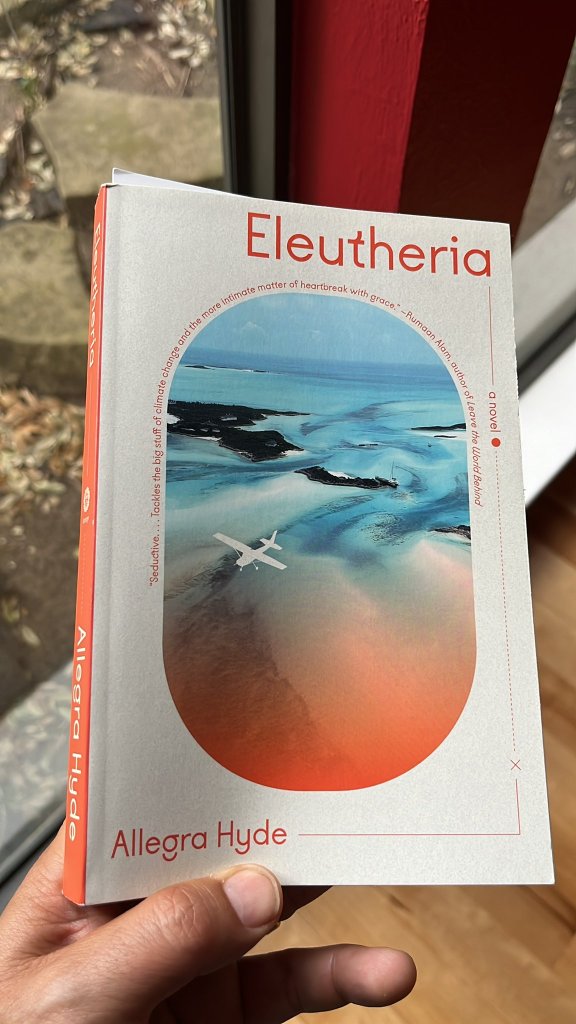
In Eleutheria debut novelist Allegra Hyde tells a provocative & personal, imaginative & realistic story of the challenges & consequences of the Anthropocene era. The novel’s two questions are big ones: “What hath man wrought?” and “What now?”
Hyde writes with historical, sociological, and emotional precision all centered on a well-meaning young idealistic protagonist Willa Marks. Homeschooled by environmentalist preppers, Willa becomes drawn to a utopian project called Camp Hope – a carbon negative sustainable compound in the hurricane-battered Bahamas poised to be an example for how to survive our environmental choices.
In Eleutheria Hyde crafts believable near-future realities (a Green Republican party, Freegan-fueled riots in Cambridge) and sobering actual realities (scholarship weaponized by the eleite, mass natural catastrophes, the consequences of imperialism and consumerism) in a suspenseful and readable blend of a coming-of-age and a falling-out-of-idealism stories. But it’s not all Willa’s story — her story fits into so much more.
In weaving foils & historical echoes, Hyde demonstrates what’s at stake, who benefits, and how we are led astray: from social media to 17th-century history, from global politics to campus politics, from eros to gaia. The last chapter was riveting & moving – as Daniel Peña said in a recent Zoom with Hyde, I don’t think I’ve read a better ending to a novel in a long time.
You can buy Eleutheriahere, and you can read about other stuff I’ve read here.
When you enter the gym, you'll recognize
a lot -- the shine of the floor, the height
of the rim, the high squeaks of feet
picking & rolling. A whistle will pierce
the air, and you'll gather, a rough
semicircle, hands on hips, game faces.

A face not unkind, a voice slightly
too loud, dressed in colors you hope
to wear. He'll tell you (probably a he)
that some of you won't make it.
And maybe for you, it's as if he's
teasing, mocking, as if he's certain that
you won't make it. So you
run and you throw
your whole body in.
Focus, push,
pass, repeat.

What you fear will not go away. Let
me take it on for you. Let me worry
and sweat, all nerves & hope seated
among the other dads, watching the next
team assemble.

Go. Play.

This is more a mantra to future-me than a message to my unafraid athlete son. Shamelessly modeled after William Stafford's "For My Young Friends Who Are Afraid".
Race in our age is admitting that we respect advantage, that progress is grievously laid aside. Society developed, yet man senses proof of a force all our fault — degenerating, criminal, rapid.
Children shown the existing body learn and work the new body.
Work and honor free entire groups. Unorganized people govern not. The body politic is taking labor, light, and care. How are profits superhuman? If all ages withdraw cooperation, a fair and free home should make all rise.
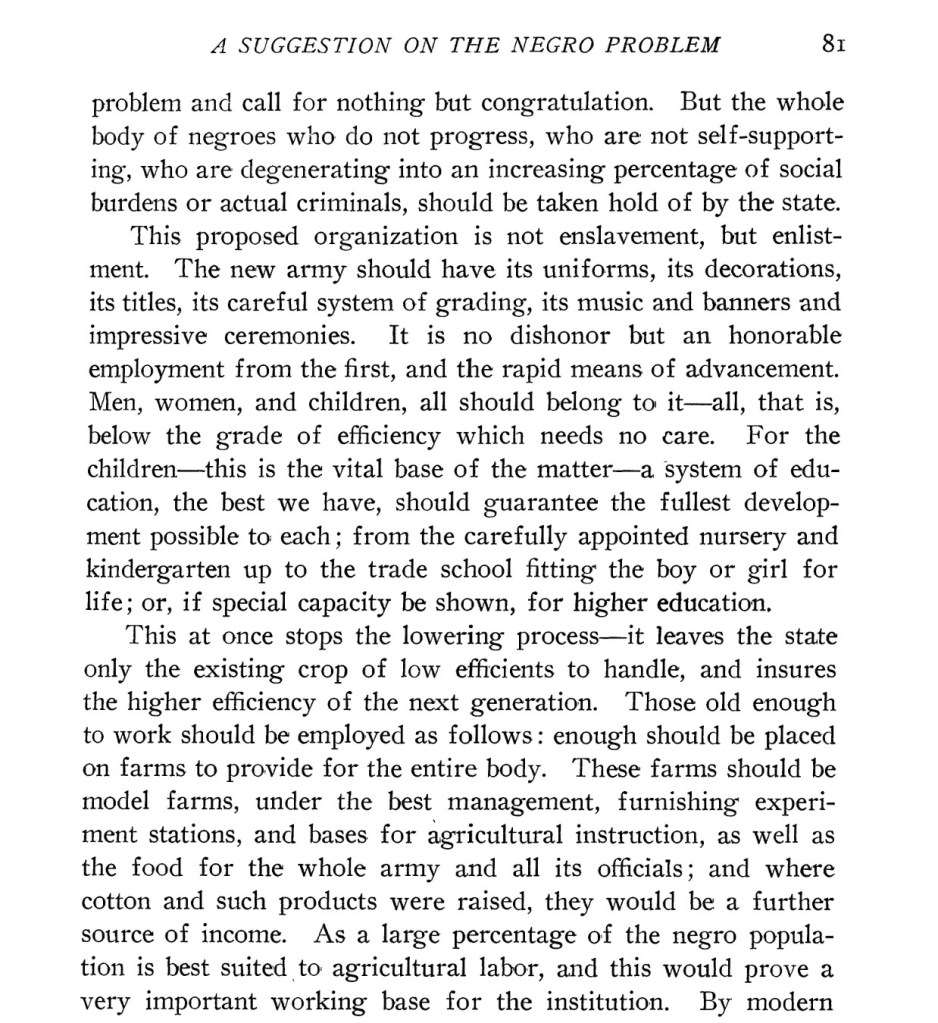
Today I’m posting my first ever blackout poem–that’s it up there. Seven sentences gleaned from eight pages. I’m not wild about it.
As a high school English teacher, I’ve been tempted to do blackout poetry projects, but I’ve wanted them to mean something, to be an exercise of true rewriting of text rather than a “fun” standalone lesson on an anodyne subject. As a high school teacher, I’ve also taught Charlotte Perkins Gilman’s “The Yellow Wallpaper” a lot. But I didn’t want to blackout a feminist text. Instead, I worked with Gilman’s 1908 “A Suggestion on the Negro Problem“, an eight-page article in which Gilman imagines an enforced labor system of certain African Americans, those who can work factories & fields “without the strain of personal initiative and responsibility to which so many have proved unequal..”
Gilman’s “suggestion” goes into some detail about the alleged benefits and procedure for the state placing those Black Americans that “do not progress” into organized labor. I blacked out each page, aiming to preserve one sentence per page — but it didn’t always work. This whole thing nauseated me — not just the “suggestion” argued but the realization that in blacking out the word “Negro”, I was merely preserving a sanitized version of the racist, self-servingly modest, clinical voice.
With students, I’d lay the groundwork carefully — at the very least, defining & offering examples of scientific racism. I’d also need to prepare them for the content of the article, maybe even looking at the publication itself, maybe even searching its current place within the academic discipline. I’m not certain that many students are used to seeing racism manifest in this way. Not sure if I’ll return to this kind of thing again, but I’m glad I gave it a try, even though it didn’t work. Or maybe it did — I truly cannot tell right now.
He rolls up his pajama top,
    a signal to caress him,
    to sing him to sleep.
    Still young enough
    to need touch,
    still young enough
    to ask to be touched
    often.

I kneel & sing.

He luxuriates in the ritual,
    one of his own design.
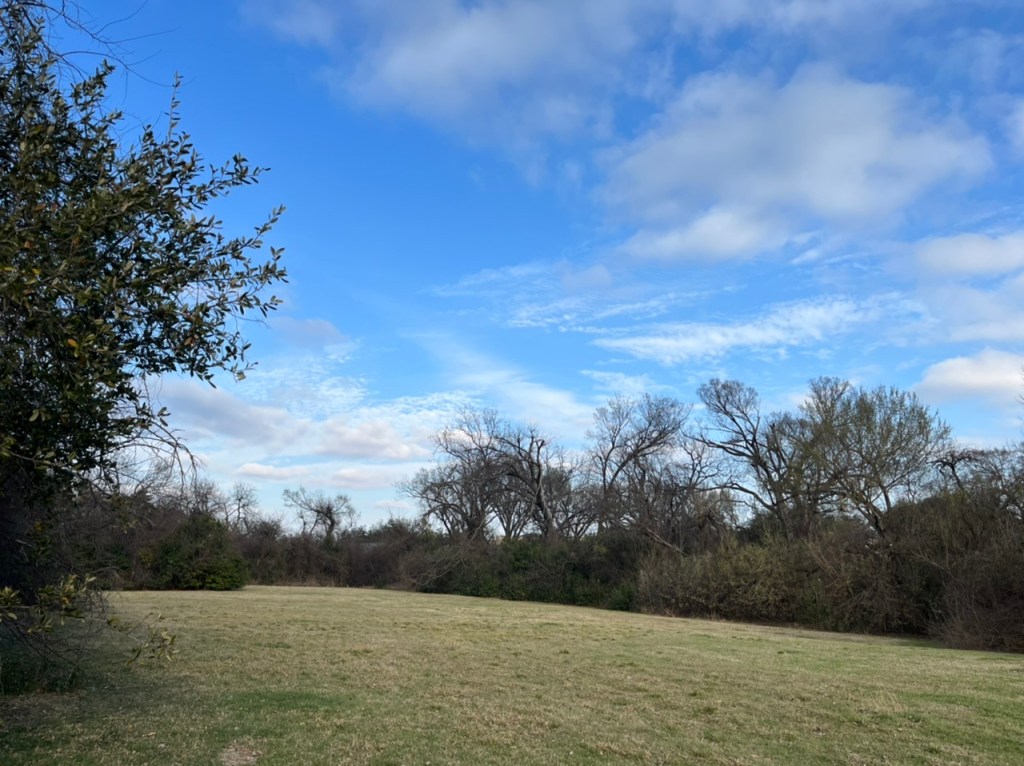
The field. March 8, 2022, between school & supper.
The boy stands before me, palming the ball,
wiggling it at me. "Dad. Outside?"
It's hot, I'm comfortable, but I succumb.
To the field.

Between our house & the field,
we toss the ball & watch for cars.
Then we're free. Surrounded
by the trees. Birds above nearly
drown out the leaf blowers.

He calls the play, & I
imagine a slightly future him,
throwing to an emptiness
he fills, an invisible target
he sees first.

I had almost lost the need to
sweat for fun, to daydream a
heroic me. Then the boy led me
outside.
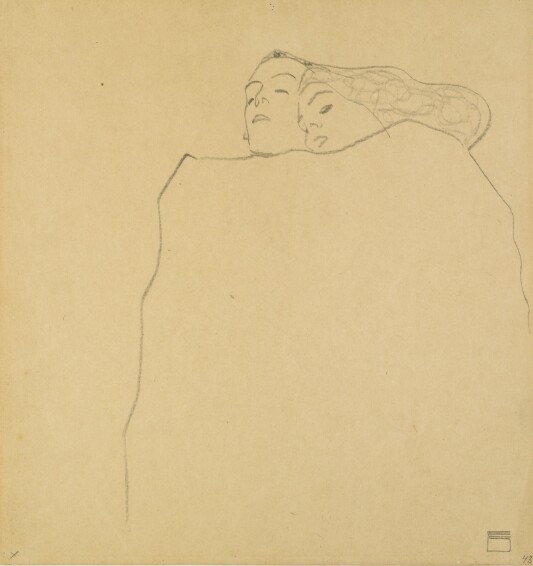
The room is cold, and your wife is crying. And smiling.
There's a speck of blood on your cheek that you notice later,
      one drop, dried brown, from the fibrous cord.

She wriggles in a shallow plastic box, cleaned & approved.
A striped hat, a diaper, a warm blanket, and an ankle bracelet
     with a magnet in it, connecting her to only the two of you.

She weighs almost nothing. Comically small in the new car seat.
There's a room at home decked out for her,
      a place that'll make us more than a couple. Now, a family.